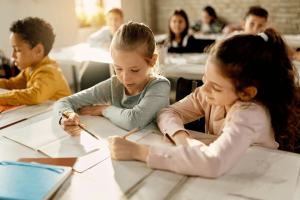
A child’s success depends not just on their innate talents or personal effort. In reality, how far they can go is mostly decided by the opportunities and environment that society creates for them. When society provides the right support and room for growth, children’s potential can be fully unlocked for a better future. In essence, how a society nurtures its youth defines the course of its own future.
I. How Societal Expectations Shape Lives for a Better Future
Everyone’s growth is inevitably shaped by the influence of societal culture and their surrounding environment. A society’s values, norms, and expectations for the next generation subtly guide a child’s path of growth and personality.
1. Societal values and the direction of a child’s growth
- The potential of innovation-driven cultures: In societies that emphasize innovation and courage, children are more likely to become forward-thinking pioneers. Silicon Valley serves as a clear example, where a culture of risk-taking and independent thought has produced countless entrepreneurs and technology innovators.
- The limits of rule-focused societies: societies that prioritize rules and conformity may achieve stability but risk falling behind in cultivating leaders who can adapt to change. For example, many Japanese companies rely on lifetime employment and hierarchical systems, which can discourage employees from voicing new ideas or challenging traditions. While Japan thrives in refining existing innovations, it often struggles to compete in areas requiring disruptive creativity.
2. The profound impact of culture on child development
- Diverging educational philosophies: Educational approaches vary greatly across cultures, shaping children’s abilities and resilience. For instance, Finland’s education system is renowned for respecting individuality and nurturing independent learning, while in some exam-driven education systems, high-pressure environments often stifle creativity and emotional resilience, focusing instead on short-term academic success.
- The power of role models: The role models a society celebrates have a profound influence on children’s aspirations. When a culture values scientists, artists, or philanthropic leaders as heroes, children are inspired to pursue dreams in these fields. On the other hand, an excessive focus solely on wealth or fame can lead to confusion and misguided priorities in their value systems.
II. Comprehensive Support from Family to Society
To help young people realize their full potential, society needs to reform the way it supports the growth of youths fundamentally. This means not only reducing unnecessary restrictions but also providing them with comprehensive resources and opportunities to thrive.
1. The role of family: support through love and guidance
Parents play a pivotal role in shaping their children’s development. Rather than giving kids pressure, they should prioritize encouragement and support. Parents should value their children’s efforts and persistence over outcomes. For example, praising the care and effort a child puts into completing a task can build their confidence and motivate them to explore new interests.
Whether a child is passionate about art, science, or sports, parental acceptance creates a safe space for them to develop their unique talents.
2. The responsibility of schools: nurturing interests and potential
Schools should go beyond passing on knowledge and play a key role in helping children discover their interests and unlock their potential. Beyond traditional classroom teaching, schools should provide diverse activities such as art programs, science experiments, sports events, and community service opportunities. These experiences give students the chance to explore different fields and find what truly inspires them.
Every child develops at their own pace, so schools should offer personalized support to encourage independent thinking and problem-solving skills. In this way, schools are creating opportunities for growth beyond standard educational frameworks.
3. Community Support: An open platform for growth and a better future
Community is an essential platform for learning and interaction. Resources like libraries, activity centers, and sports clubs provide spaces where children can connect and grow. Through volunteer work, social projects, or internship opportunities, they can engage with a broader world, learn to collaborate with people from diverse backgrounds, and expand their horizons.
Communities can also host activities like intergenerational dialogues and career exploration seminars. These activities connect children to a variety of perspectives and experiences, enriching their understanding of the world around them.
4. Government Policies: Ensuring equity and access to resources
The government should make education and youth development top priorities. By directing more funding to schools in remote or underserved areas, every child will have access to quality education. Offering scholarships can help overcome barriers related to geography or family background, ensuring equal opportunities for all.
Partnerships with businesses can provide valuable opportunities for career awareness, skill-building, and internships. These programs help prepare young people with the knowledge and experience they need to thrive in their future careers.
5. Media and culture: Making a better future by shaping role models and values
Media and culture subtly shape the way young people see the world. By sharing stories that celebrate courage, innovation, and diversity, they can inspire children to chase their dreams and explore new horizons. Through movies, books, and social media, positive role models can show them a range of possibilities and help them find their own path.
At the same time, it is crucial to regulate harmful or inappropriate content to create a supportive cultural environment. Ensuring access to enriching and uplifting messages helps protect children from negative influences and fosters their healthy development.
6. Supporting Mental Health: Building strength in mind and body
Teen mental health needs special care from society for a better future. Offering counseling and accessible support systems allows them to seek help during tough times.
Meanwhile, a supportive, empathetic environment fosters a sense of safety and belonging, encouraging kids to grow in confidence and explore freely. Therefore, reducing stress and isolation is a societal responsibility to ensure healthy growth.

III. Growth Opportunities: Unlocking a Multidimensional Better Future
Children’s potential often exceeds our expectations, but only with a vast space for growth can they discover themselves, explore the world, and shape their future.
1. Broadening internation horizons: shaping global citizens
The advocacy for a better future is global, and it is essential for children to develop cross-cultural communication skills and global awareness from a young age.
- Cross-cultural exchange: Schools and community organizations can create international exchange programs or online cross-cultural learning experiences, allowing children to engage with different cultures and expand their worldview.
- Multilingual education: Learning a second language is not just about gaining a new skill—it’s also a way to show respect for and understand other cultures.
2. Embracing technology for a better future to education: connecting children to tomorrow
As artificial intelligence, the Internet of Things, and other technologies continue to evolve, children need to engage with technology early to foster innovative thinking and practical problem-solving skills.
- Innovation education: Use coding, robotics, and competitions to develop kids’ problem-solving skills through real-world practice.
- Exploring careers for a better future: Host camps on AI and space technologies, encouraging kids to dream big and explore advanced fields.
3. Returning to nature and community: grounding in real life
While technology and globalization are essential for a better future, children also need to reconnect with nature and their community to build genuine bonds with their surroundings and people.
- Nature education: Organize children to participate in outdoor exploration and ecological conservation activities, helping them experience the meaning and responsibility of life through nature.
- Community interaction: Communities can help children learn social skills and develop a sense of responsibility. Activities like volunteering or neighborhood cooperation can strengthen their social awareness.
IV. Collective responsibility and a better future for society
A child’s growth is not the sole responsibility of one family, one school, or one community, but a shared task for society as a whole. Only through the collective effort of families, schools, communities, governments, and the media can we create an ecosystem truly conducive to children’s development.
Nurturing healthy, confident, and creative young people is not just support for individuals, but an investment in the future of society. They will become the driving force behind social development, injecting continuous vitality into the community.
Only when every child has equal access to growth resources and opportunities can society become more inclusive and diverse, reducing long-term social risks caused by inequality.
Children are the hope of society, and the support they receive determines the height and breadth of their growth. When we create more opportunities, provide better environments, and open up broader spaces for growth, we are not only changing their lives but also shaping the future of society. Let us work together for a better future, to pave the way for the next generation, lighting the path to a brighter future and sowing seeds of eternal hope for society.