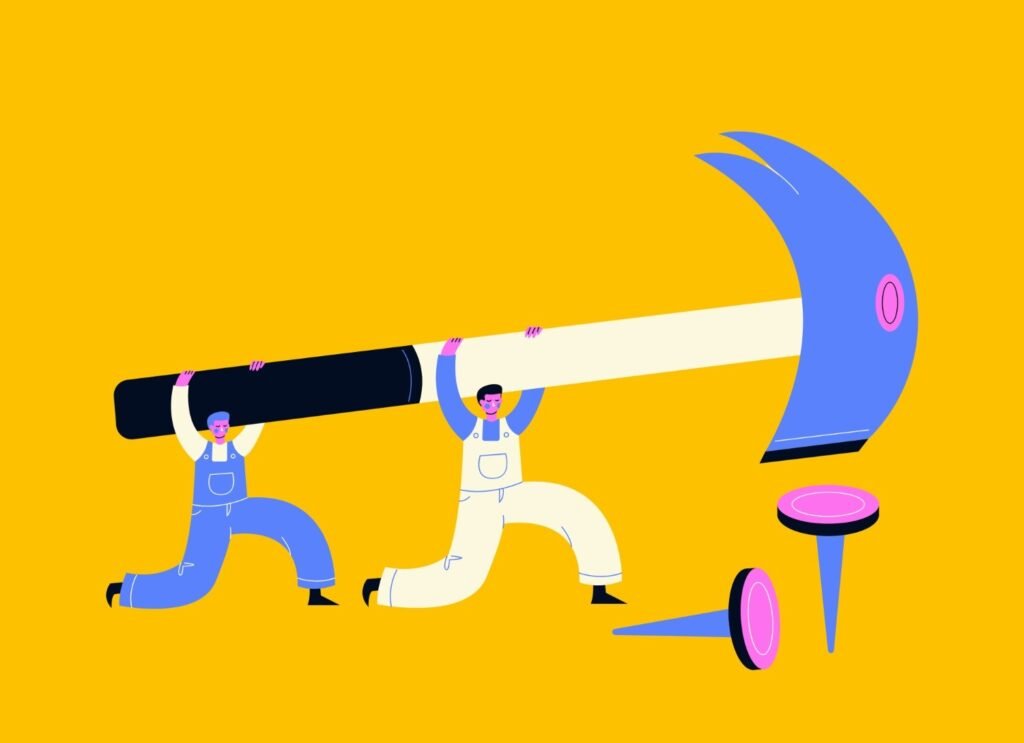
Reflection One: People are often excluded by the civilization systems in society.
Reflection Two: The reason people are unhappy is because they are excluded by the civilization systems in society.
Reflection Three: Yicheng Commonweal strives to identify and break the barriers of civilization, allowing everyone to share the fruit of civilization and societal progress.

The civilizational system in modern society governs management, order, and growth. Beyond systems and technology, it encompasses cultural values, social norms, and power structures, influencing individuals’ survival, happiness, and societal integration.
As a result, what appear to be highly efficient and advanced systems often exclude many, marginalizing them in a society that preaches fairness. Such exclusion is a violation of individual rights and a question to the meaning of civilization itself.
The Paradox of Civilization Systems
The progress of civilization is often accompanied by the neglect of certain groups, especially in the highly organized and technological context of modern society. lt leads to their “silent” existence within these civilization systems.
1. Exclusivity of Rules and Standards
At the heart of civilization systems lies a framework of rules and standards. However, the widespread application of these rules often overlooks the inherent differences between members of society.
A clear example of this is the education system. Educational systems typically operate on a standardized talent-selection mechanism, aiming to provide equal opportunities for competition. In practice, however, this system favors families with cultural capital and educational resources, thereby excluding disadvantaged groups who lack such resources.
For those from impoverished or marginalized backgrounds, the scarcity of educational resources makes it difficult for them to compete with mainstream society. This gap often begins in early childhood, as they lack access to quality cultural experiences and struggle to acquire the same education and skills as their wealthier counterparts.
2. The Indifference of Technological Progress
While technology has driven the rapid progress of civilization systems, it has also deepened the sense of alienation between individuals and the systems that govern them. For instance, the widespread digital public services has boosted efficiency, but it has also overlooked those unable to access or adapt to new technologies—particularly the elderly and economically disadvantaged groups. This “indifference” of technology has pushed them further to the fringes of society, creating a divide known as technological exclusion.
3. Cultural Dominance and Its Hidden Hegemony
Civilization systems are often underpinned by the value orientations of mainstream culture, which tend to suppress diverse perspectives. In the era of globalization, many cultural and social systems struggle to accommodate different values and cultural expressions effectively. Immigrants, ethnic minorities, and groups with diverse genders and sexual orientations frequently face marginalization due to their cultural backgrounds, lifestyles, and beliefs.
This exclusion goes beyond laws and policies, manifesting in everyday life through subtle social biases and the rejection of other cultures. While modern society advocates for inclusivity and diversity, mainstream cultural norms and values often impose constraints on minorities. This creates barriers to their full integration into society and leaves them disadvantaged when it comes to accessing cultural and economic resources.
The Impact of Exclusion in depth
1. Psychological Challenges for Individuals
Excluded groups often experience feelings of powerlessness and isolation. This exclusion is not only reflected in the lack of material resources and opportunities but also profoundly affects an individual’s psychology and sense of identity. Those who remain in lower social strata for long periods frequently lack access to quality education, cultural activities, or social networks. This absence of cultural capital and social experience widens the perceived gap between them and mainstream society, gradually eroding their trust in and sense of belonging to the larger community.
For example, low-income workers who face prolonged unemployment often find themselves overwhelmed by the complexities of social welfare application processes. This sense of frustration can lead them to withdraw entirely, further entrenching their marginalization. Over time, the accumulation of such exclusion can result in serious psychological challenges, including self-doubt, depression, and anxiety, creating a vicious cycle that exacerbates their isolation.
2. Triggers of Social Instability
Exclusion not only harms individuals but can also pose a threat to social stability. Groups that are excluded by the system often form subcultures. While these groups may appear non-mainstream or marginalized on the surface, they represent deeper issues and contradictions within the social structure.
For instance, impoverished communities in urban areas may become breeding grounds for gang organizations, where members may resort to illegal activities as a means of asserting their social presence. As this opposition accumulates, it can lead to larger-scale social conflicts. A clear example of this is the rise of populism, where the dissatisfaction of lower-income groups is often exploited by political forces, resulting in a rebellion against the “mainstream” class.
3. Internal Drain and Decline of Civilization Systems
When a portion of the population is excluded from the civilization system, this exclusion itself intensifies resource waste and reduces the system’s efficiency. Groups that are unable to fully participate in social and economic activities cannot contribute their potential labor and creativity to society, ultimately becoming a burden.
For instance, a large number of children who are not in school represents a loss of future labor, and gaps in the social security system can lead to higher management costs. This not only hampers the overall development of civilization but also weakens social cohesion.
Ethical Reflections on Civilizational Exclusion
On the surface, exclusion seems to stem from imbalances in the distribution of resources and rights. However, on a deeper level, it unveils the ethical misalignment and value confusion embedded within the progress of civilization.
1. The Flaws of Efficiency-Driven Systems
Modern civilization systems prioritize efficiency as their core objective. This focus has undeniably driven social progress, enhancing productivity and optimizing resource use. Yet, an efficiency-first approach often disregards the diversity and unique needs of individuals. When systems operate through standardized and centralized mechanisms, they risk sidelining those who don’t conform to “mainstream” norms or who lack sufficient empowerment.
For instance, urban development frequently prioritizes large commercial hubs and economic projects while neglecting the fundamental needs of grassroots communities. Although the pursuit of efficiency has its merits, if left unchecked, it may sacrifice individual rights and destabilize the equilibrium of broader societal development.
2. The Double-Edged Sword of Instrumental Rationality
Modern civilization systems inevitably rely on instrumental rationality, which treats individuals as measurable, analyzable, and controllable entities. While this approach has improved the organization and efficiency of social systems, it risks oversimplifying the complexity of human nature and ignoring people’s spiritual and emotional needs.
The labor market treats human resources as production units to maximize efficiency, but often neglects workers’ dignity and well-being. The dominance of instrumental rationality has led systems to become cold and mechanized in their pursuit of efficiency.
3. Structural Neglect of “the Other”
As philosopher Emmanuel Levinas said, the existence of the “Other” is the starting point of morality. However, in the fast pace of civilization’s development, biases often marginalize voices outside the mainstream. Immigrants and minority groups, for instance, are frequently overlooked, with their rights and quality of life starkly differing from the majority, and the system lacks adequate mechanisms for inclusion and balance.
This neglect is not intentional but stems from the system’s inability to accommodate minority perspectives in its pursuit of efficiency and standardization. As a result, these “Others” are marginalized, sometimes deliberately ignored, deepening social inequality and eroding the diverse values of the civilizational system.

Ways to Resolve the Problem
1. Redefining Human-Centered Systems
The design of civilizational systems should shift from serving the “majority” to serving “everyone”, with a focus on the needs of vulnerable groups. By including individual growth in social decisions, we can better support citizens’ well-being, reduce social unrest, and foster sustainable development.
For instance, the government might introduce diverse educational assessments to provide suitable pathways for students of varying backgrounds, and the healthcare system should strengthen community outreach to address the health concerns of marginalized populations.
2. Structural Reforms for Systemic Inclusivity
To tackle exclusion, it is crucial to implement comprehensive and structural reforms, particularly in the areas of legal protections and the universal accessibility of public services. Reforms should ensure that the basic rights of all groups, particularly marginalized ones, are legally protected. Moreover, public service processes should be optimized to guarantee that everyone—especially vulnerable populations—can equally access societal resources.
3. Cultural Identity and Social Dialogue
The foundation for dismantling cultural hegemony lies in acknowledging diversity and creating platforms for dialogue between mainstream and minority cultures. For example, promoting multicultural education and spreading the values of inclusivity and understanding through media and community initiatives.
One such example is Canada’s policy of integrating multicultural education at all levels of schooling, ensuring that students are exposed to diverse cultural backgrounds, knowledge, and histories.This policy not only increases social acceptance of minority groups but also reduces the cultural tensions that often lead to social exclusion and discord.
In addition, it is essential to listen to the voices of marginalized communities. Their experiences and needs should be considered as a vital part of social and cultural progress, driving us toward a more inclusive and cohesive society.
Rebuilding Social Consensus
The exclusion inherent in civilization systems reflects not only institutional shortcomings but also the fragmentation of social consensus. Therefore, addressing this issue requires the reconstruction of a social consensus based on mutual support and coexistence.
1. A Multidimensional Definition of Civil Progress
Traditional definitions of civil progress are often tied to economic growth and technological progress, but these metrics fail to encompass the needs of all members of society. Civil progress should be redefined as advancements that respect and accommodate individual differences, rather than simply a measure of material advancement or cultural export. In this new framework, the presence of marginalized groups is not seen as an anomaly but as an integral and enriching component of civilization’s broader meaning.
2. Reshaping Social Structure for Balance
The inclusivity of civilization systems can only be realized through adjustments in social structure. At present, the distribution of social resources is heavily skewed towards a small elite and power centers, while the general public and marginalized groups are systematically overlooked. To address this, policy measures such as progressive taxation and universal basic income programs should be introduced to ensure that vulnerable groups can also benefit from the advances of civilization.
3. Changing Societal Values
Overcoming exclusion in civilization demands a deep transformation in societal values. Education and cultural institutions should guide the public to recognize that everyone’s right to exist and dignity deserves respect, regardless of identity, background, or ability.
For instance, community collaboration projects, public welfare activities, and cross-cultural exchanges can be used to foster greater understanding and trust between different social groups, thereby reducing societal division and opposition.
From Exclusion to Symbiosis: A Vision for the Future of Civilization
Addressing the exclusionary aspects of civilization systems is a complex challenge that requires a fundamental shift in society—from awareness to action. The civilization of the future should be a symbiotic system, where every individual is valued as an essential part of the whole.
1. Building an Open System
The civilization system of the future must be open, able to actively absorb diverse voices and quickly adapt to the varied needs of society. In this process, more social organizations and individuals should be involved in decision-making on public affairs, ensuring that the design and operation of the system account for the interests of a wider range of groups and generate greater social welfare. Public policies should not rely solely on experts and bureaucrats but should actively seek input from all levels of society, especially the voices of marginalized groups.
2. Spiritual Dimensions of Civilization
A truly civilized society is not only materially prosperous but also spiritually fulfilled. Future civilization should focus more on people’s inner needs—such as security, belonging, and self-actualization—by integrating human-centered principles into system design.
Encouraging social participation and individual expression, and providing opportunities for interaction, will help everyone feel needed and recognized. Social groups should promote public cultural activities and volunteer projects, ensuring that everyone benefits from social welfare and contributes to the development of community and civilization.
3. Reconciliation between Civilization and Nature
The exclusionary tendencies of civilization are not only social but also environmental. As modern civilization advances, it often overlooks the damage to ecosystems and the overuse of natural resources. If future civilizations fail to address these issues, they risk undermining the well-being of all humanity. Therefore, ecological sustainability should be a central focus of future civilizations, promoting a balance and harmony between human development and the natural world.
Conclusion
The exclusion present in our civilization systems highlights a core problem: although civilization is meant to serve everyone, it often fails to do so in practice. To address this, we must approach the challenge with greater courage and wisdom, redesigning civilization to create a genuine, inclusive home for all. The true purpose of civilization is not to enforce perfect rules, but to accept and nurture imperfect lives. Only when every individual can experience dignity and belonging within society can we truly claim to have achieved a civilized world.