I. Why are cowardly and brutal styles of education so common in Eastern societies, especially in China?
To understand these two distorted educational patterns, we must go beyond blaming individual parents or schools. Instead, it is necessary to examine the deeper cultural and historical roots—particularly the long-standing authoritarian structure of Chinese civilization.
For centuries, Chinese society operated under centralized power, where a person’s fate was tightly linked to political authority. Even minor dissent could lead to bring disasters to not only the individual but their entire family. In such a high-risk environment, people developed two common survival strategies:
- The first was extreme caution—avoiding responsibility, staying silent, and never standing out. Even when faced with injustice, lies, or wrongdoing, many chose to ignore it in order to stay safe.
- The second was extreme aggression—using violence, connections, or authority to suppress others and secure personal gain. In a system where justice is weak and rules are unclear, power and force became tools for survival.
Over generations, these survival behaviors were passed down through family traditions, education systems, social norms, and public discourse. Gradually, they became deeply embedded in the cultural mindset.
As a result, from a young age, individuals are often taught one of two belief systems. Some grow up hearing messages like:
- “Mind your own business.”
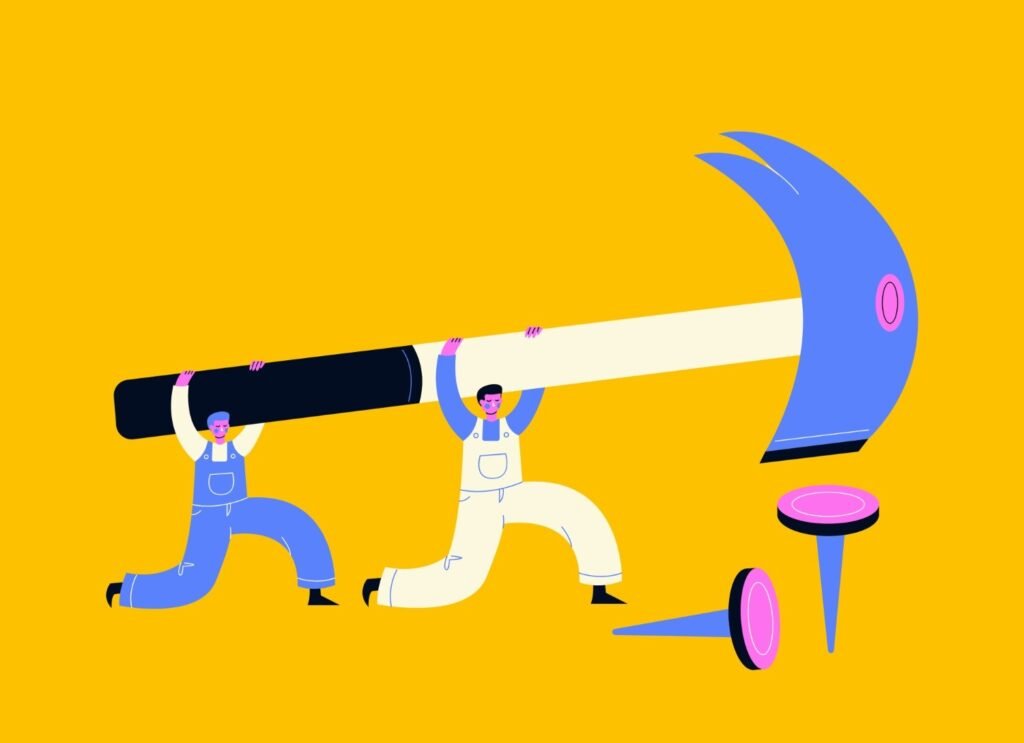
- “The nail that sticks out gets hammered.”
- “Do not talk about right or wrong—just say what benefits you.”
Others grow up with messages like:
- “Whoever has the strongest fist gets to decide.” “The one in charge is always right.”
- “If you can use force, there is no need for reason.” “We cannot fight them, so we might as well submit.”
- “Power and money make you a god.” “Everything is about money.”
This is precisely the civilizational and psychological soil in which the dual personalities of cowardice-based and brutality-based education are especially likely to emerge in Eastern societies—particularly in China.
II. The vicious cycle in social ecology: how cowardice-based and brutality-based education reinforce each other
At first glance, these two types of education seem opposites—one soft, the other harsh. But in reality, they create the perfect breeding ground for each other and sustain one another.
Why is that?
Because the brutal rely on the silence of the cowardly, and the cowardly rely on the dominance of the brutal.
The cowardly dare not speak the truth, uphold justice, or resist wrongdoing, which only encourages the arrogance of the brutal. Meanwhile, the brutal use violence, connections, and power to suppress opposition, pushing ordinary people to become even more fearful.
Results:
- Good people are silenced like terrified birds, while bullies reap the benefits.
- Righteous voices quietly disappear, leaving evil to dominate the conversation.
- Integrity is mocked as foolishness and dismissed as angry rebellion.
- Violence becomes the passport, the true representative of power.
Such a systemic vicious cycle exists universally, whether in the Qing imperial court of old or in modern arenas like online public opinion, the workplace, government, and the capital market.
The worst part of this structural issue is that it gives rise to a false stability where society seems organized but is actually breaking down from within.
When wrongdoing goes unchecked, when power acts without limits, and when everyone seeks only self-preservation without responsibility, even the richest and largest societies will quickly become fragile and collapse.

III. On the civilizational level: collapse patterns of cowardice- and brutality-driven societies
Looking across the history of human civilizations—from the Roman Empire, the Ottoman Empire, the Qing Dynasty, to the Soviet Union—almost every collapsed civilization follows a common pattern:
- The common people become generally fearful, unwilling to question authority or seek the truth.
- The ruling class abuses power violently, rules break down, and justice becomes impossible.
- Institutions appear normal on the surface, but morality, justice, order, and trust systems are completely shattered.
- Society is reduced to mere calculations of self-interest, lacking shared values and any pursuit of justice.
Ultimately:
- Before external enemies arrive, the system collapses from within.
- Before finances fail, public trust dissipates.
- Before external threats intensify, internal conflict destroys.
A culture of cowardice erodes the moral foundation, while a culture of brutality destroys the rule of law. Under this dual assault, even the most seemingly powerful civilizations quickly disintegrate.
Today, if this culture continues to spread unchecked in the East and exports itself through globalization to other civilizations, humanity faces a catastrophic future—a global collapse of shared values, widespread cowardice, and normalization of violence.
IV. Current reality: how is the Chinese education model harming the world?
At present, the cowardly and brutal aspects of the Chinese education model are spreading and impacting global public environments in various ways.
- Capital penetration: Large capital-driven enterprises, prioritizing profit above all else, exploit workers, monopolize resources, and evade laws. They promote a culture of pure profit-seeking, spreading across Southeast Asia, Africa, and Eastern Europe, driving a brutal system that values power and profit over justice.
- Social discourse dissemination: Through the internet, social media, and short video platforms, values rooted in cowardice—such as “it is none of my business,” “the less trouble, the better,” “backing down is a survival strategy,” and “standing up is foolish”—are being promoted, gradually eroding young people’s sense of responsibility and moral courage around the world.
- Cultural clashes through migration: The migration of individuals shaped by cultural norms emphasizing submission and authoritarianism introduces informal power dynamics—such as patronage networks, rule-bending practices, and non-confrontational attitudes—into liberal democratic societies, posing serious threats to institutional trust and civic order.
- Erosion of international order: Passive nations stay silent, aggressive regimes provoke. Rules lose meaning, justice becomes costly, evil becomes easier. The world sees more wrongdoing—and fewer consequences.
If this cultural virus continues to spread unchecked, global social governance will spiral out of control, public morality will fracture, and institutionalized violence will become rampant.
V. The path forward: restoring courageous character and rebuilding civilizational bottomline
What will truly save Eastern civilization—and perhaps world civilization—is not producing more clever cowards, smooth opportunists, profit-driven minds, or power worshippers. It is cultivating individuals with courage, principles, a sense of responsibility, and unshakable integrity.
That is the ultimate mission of education.
Priorities for future educational reform:
- Parents should teach children to take responsibility, not just protect themselves.
- Schools should encourage students to speak the truth, not simply say what sounds good.
- Public discourse should welcome critical questioning, not suppress opposing voices.
- Government institutions should uphold justice, not enable authoritarian power.
- The international order should hold wrongdoers accountable, not surrender through compromise.
Only in this way can we rebuild a character rooted in courage and integrity, restore the value of justice, and protect civilization from being devoured by cowardice and brutality.
Conclusion
The culture of cowardice and brutality in Eastern education (especially Chinese eduaction) is not just a problem for one region, but a growing threat to the future of global civilization.
If we do not see it clearly today, tomorrow we may face a world of broken order, widespread cynicism, growing violence, and the loss of justice.
Courage and responsibility are the foundation of a living, lasting civilization.
When people have backbone, society stays strong. When integrity is lost, civilizations fall. Let this be a wake-up call to us all.