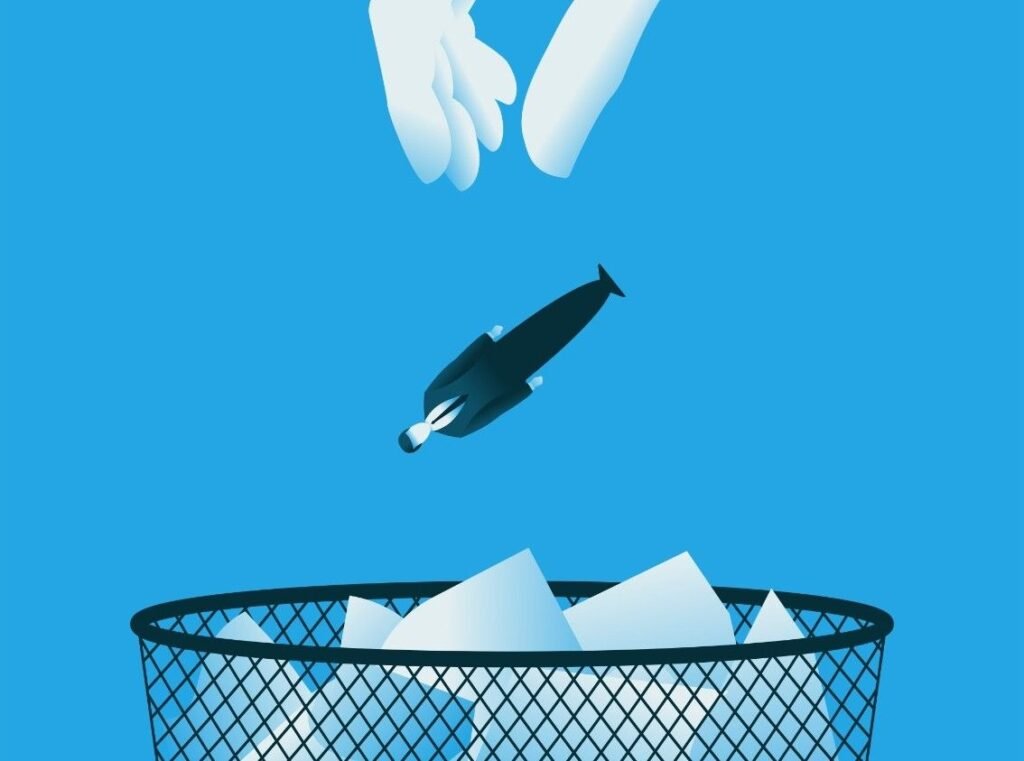
To create a more advanced civilization, we must first understand both the foundations of a civilized society and the forces that drive progress. Meanwhile, it is also necessary to recognize the factors that are hindering the advancement of civilization. Only with this understanding can people work together to build a society that cultivates virtue and goodness while eliminating harmful elements before they take root.
This article will discuss dictatorship, a political form common throughout human history, and its impact. The article is divided into four sections:
I. The Impact of Dictatorship on Various Social Fields
II. How Dictatorship Limits Freedom
III. The Impact of Dictatorship on Education
IV. The Mindset of Dictators

I. The Impact of Dictatorship on Various Social Field
Dictatorship, along with its collaborators and associated organizations, stands as the greatest enemy to building a civilized society. It is the common adversary of all citizens, the poison that erodes democratic progress, and the root cause of man-made disasters. Combating and preventing dictatorship is the starting point and safeguard for creating a civilized society. Now, let’s examine how dictatorship undermines civilized societies and list some of the typical, widespread impact it has across different fields:
1. Economy:
- Control and Monopoly: Dictatorships tend to concentrate economic resources in the hands of a small elite, creating monopolies. This stifles market competition and leads to unfair distribution of resources.
- Corruption and Inefficiency: The lack of transparency and accountability fosters widespread corruption. Decisions are often driven by political interests rather than economic efficiency.
2. Agriculture:
- Forced Collectivization: Dictatorships often impose collectivization or nationalization to control agricultural production, which can lead to reduced agricultural output and lower living standards for farmers.
- Misallocation of Resources: Agricultural resources may be diverted to non-productive projects, resulting in food shortages and the collapse of rural economies. They might also expropriate land from farmers for state projects or other uses.
- Suppression of Innovation: Dictatorships might stifle agricultural innovation and technological advancement by suppressing independent research and development or limiting access to modern farming techniques.
3. Industry:
- Centralization and State Control: Industrial production is often tightly controlled, leading to reduced innovation, rigid industrial structures, and an inability to adapt to changing market demands.
- Labor Exploitation: Dictatorships may increase industrial output through forced labor and suppressing wages, resulting in deteriorating living conditions for workers.
4. Society:
- Social Division: Dictatorships often maintain power by inciting hatred and mistrust, leading to social fragmentation and heightened hostility between groups.
- Control and Oppression: Strict control over speech, assembly, and association stifles social vitality and diversity. Extreme nationalism is often encouraged and causes intolerance and exclusion.
5. Civil values:
- Human Rights Violations: Citizens’ rights are often severely violated, with restrictions on freedoms such as speech, religion, and political movements.
- Political Persecution: Opponents and dissidents are frequently arrested, imprisoned, and subjected to organ harvesting, the trafficking of babies and children, the sale of corpses, or even execution. Citizens live in constant fear. Often, these acts are conducted secretly to avoid public awareness, which explains the rise of direct online video reporting as a last resort for exposing such abuses.
6. Employment:
- High Unemployment: Due to misguided economic policies and rigid industrial structures, job opportunities decline, and unemployment rates rise. When they can’t lower the unemployment rate, they manipulate the statistics—a common “scientific” method used by such regimes.
- Forced Employment: Some dictatorships compel citizens to work in designated jobs, limiting their freedom of career choice.
7. Politics:
- Political Purges: Dictatorships consolidate power by eliminating political rivals, leading to an unstable political environment and causing harm for people.
- One-Party Rule: Dictatorships often establish a one-party system or cultivate a cult of personality, suppressing all opposition voices.
8. Military:
- Military Supremacy: Dictatorships prioritize military power to maintain their rule, which can lead to arms races and frequent military conflicts.
- Conscription and Forced Military Service: Citizens are forcibly conscripted into the military, with military spending diverting resources from civilian needs.
- Military Adversaries: Dictatorships may fabricate or exaggerate the presence of national enemies to justify military actions or maintain control, creating adversaries where none exist.
9. Living Conditions:
- Decline in Living Standards: Due to economic chaos, corruption, and misallocation of resources, the standard of living for ordinary people plummets.
- Daily Fear: Dictatorships maintain control through fear and repression, causing citizens to live under constant stress and fear.

10. Beliefs:
- Religious Suppression: Dictatorships may suppress religious practices, persecute religious groups, and impose state-sponsored religious institutions or ideologies.
- Thought Control: Through education, propaganda, and cultural policies, dictatorships enforce official ideologies, suppressing diverse beliefs and worldviews.
11. Finance:
- Capital Controls: Dictatorships often implement strict capital controls to maintain economic stability, which can lead to capital flight and a deteriorating investment environment.
- Currency Devaluation: Poor economic policies can lead to significant devaluation of the currency, which causes inflation to spiral out of control.
12. Foreign Affairs:
- Isolationism: Dictatorships may choose to isolate themselves from the world, which harms their relationships with other countries and often leads to international sanctions.
- Diplomacy as a Tool: Diplomatic policy is often used to reinforce domestic rule rather than to foster international cooperation.
13. Legislation:
- Dictator-Controlled Lawmaking: The dictator makes all the laws, and the legislative process becomes a mere formality. Laws are created just to keep the dictator in power.
- Damage to the Legal System: The legal system is broken, with laws no longer being fair or equal, but instead used to oppress people.
14. Law:
- Judiciary Controlled by the Dictator: The dictator controls the courts, making them tools of the dictatorship instead of independent bodies.
- Misuse of Law: Laws are used unfairly to target anyone who opposes the regime, leading to political trials and unjust legal processes.
15. Art:
- Limited Artistic Freedom: Artistic creation is tightly controlled and censored, and freedom of expression is suppressed, making cultural creativity stagnant.
- Art as Political Propaganda: Art is turned into a tool for political propaganda, with its true artistic value of genuine expression being twisted.
16. Innovation:
- Stifling New Ideas: Dictatorships restrict the spread of new ideas and innovation to protect their power, causing technological and cultural stagnation.
- Brain Drain: Due to oppression and lack of freedom, many creative talents are forced to flee to other countries.
17. Culture and Thought:
- Cultural Uniformity: Dictatorships enforce a single ideology through cultural policies, suppressing cultural diversity.
- Thought Control: Education and media are usually used to instill the regime’s ideology, severely limiting independent thinking.
- Forced and Political Marriages: Dictatorships may manipulate marriages for political gain, trampling on personal freedom by forcing or arranging marriages to consolidate power.
Dictatorships affect every part of society in a deep and lasting way. They often choose people for important positions based on corruption, which weakens the entire society and limits opportunities for innovation and growth. Without opposing dictatorship, the construction of a civilized society is impossible.

II. How Dictatorship Limits Freedom
1. Freedom of Speech:
- Suppressing Dissent: Dictatorships control speech through censorship, surveillance, and punishment, silencing different opinions and criticism. The media is either nationalized or tightly controlled, and independent journalists and news outlets are forced into silence or persecuted.
- Atmosphere of Fear: Citizens who express dissenting views, whether in public or private conversations, may face imprisonment, torture, or even death threats, creating a climate of fear that leads to self-censorship.
2. Freedom of Association:
- Banning or Controlling Organizations: Dictatorships typically ban or heavily restrict the activities of independent organizations such as NGOs, labor unions, and religious groups. Any form of gathering, protest, or collective action is likely to be violently suppressed.
- Forced Participation: The government may force citizens to join certain state-approved organizations, making it easier to control and monitor their activities and thoughts.
3. Freedom of Religion:
- Religious Persecution: Religious beliefs are often seen as a threat because they may offer moral or ideological alternatives to the state’s ideology. Places of worship may be shut down, believers persecuted, and religious leaders imprisoned or even executed.
- Enforced Atheism or State Religion: Some dictatorships impose atheism or establish a specific religion as the state religion, suppressing the growth and practice of other faiths.
4. Freedom of Movement:
- Restricted Exit: Citizens are often unable to leave the country freely, as dictatorships fear people might escape or spread dissenting ideas abroad. Border control is strict, and exit processes are complicated, with high chances of application being denied.
- Internal Movement Restrictions: Domestically, movement may also be restricted, especially in sensitive areas or major cities. The government may use systems like household registration or other controls to limit population mobility.
5. Freedom of Thought:
- Thought Control: Dictatorships attempt to control citizens’ thoughts through the education system, media propaganda, and cultural policies. Alternative ideologies or belief systems are viewed as threats, and school curriculums are filled with political propaganda.
- Persecution of Intellectuals: Intellectuals, scholars, and thought leaders who express views contrary to the government often face persecution, imprisonment, or are forced into exile.
6. Individual Right of Privacy:
- Widespread Surveillance: Dictatorships typically establish extensive surveillance networks, employing secret police, personal armies, private judiciary, communication monitoring, and a system of informants to watch citizens’ actions and thoughts. Privacy is significantly curtailed, and personal lives are heavily intruded upon.
- Control Through Technology: With advances in technology, dictatorships may utilize big data, artificial intelligence, and other tools to more effectively monitor and control citizens, further stripping away their right to privacy.
7. Freedom of Elections:
- Election Manipulation: When elections do take place, dictatorships often manipulate the process to ensure outcomes that align with their interests. Voters are intimidated, opposition candidates are restricted or disqualified, and the election itself becomes a mere formality.
- Cancellation or Postponement of Elections: In many cases, elections may be completely canceled or indefinitely postponed, allowing dictators to extend their rule through various means and maintain power indefinitely.

8. Personal Freedom:
- Control of Actions and Speech: Dictatorships enforce strict control over citizens’ daily actions and speech through laws, police forces, the military, judicial institutions, and social propaganda pressure. Any behavior that deviates from the official line is subject to punishment.
- Elimination of Dissent: Through terror and repression, dictatorships aim to eradicate any form of dissent and criticism, ensuring that citizens’ thoughts and actions are fully aligned with their own interests.
- Cultivation of a Compliant Population: Dictatorships often promote ideologies of submission and obedience, eroding citizens’ sense of individual rights and civic responsibility. This strategy is designed to suppress dissent and encourage people to passively accept the regime’s authority, reducing them to a state of subservience, with limited personal agency or power to challenge the system.
III. The Impact of Dictatorship on Education
Dictatorships typically use education as a tool to control thought, consolidate power, and maintain their regime. This has a profound impact on various aspects of the education system, including the content of textbooks, teacher autonomy, academic research, and the intellectual development of students. Here are the key effects of dictatorship on education:
1. Control of Textbooks and Curriculum:
- Political Indoctrination: Dictatorships often transform the education system into a vehicle for promoting the official ideology. Textbooks and curriculum content are strictly censored to align with the regime’s political objectives. Subjects like history, politics, and social studies are especially prone to distortion, and real historical events may be altered or covered up.
- Removal of Dissenting Content: Dictatorships tend to remove any material from textbooks that could provoke questioning or opposition. In its place, content glorifying the leadership or regime is introduced. Educational content is reduced to a single perspective, stifling the development of critical thinking.
2. Suppression of Academic Freedom:
- Persecution of Scholars: Scholars and teachers are closely monitored in dictatorships, and expressing views that challenge or question the regime can lead to dismissal, imprisonment, or exile. The independence of academia is severely compromised, and academic freedom is greatly restricted.
- Restrictions on Research Fields: Dictatorships often ban or limit research in sensitive areas such as political science, sociology, and history to prevent scholars from exposing or criticizing the regime’s corruption and oppression.
3. Indoctrination and Brainwashing:
- Imposition of a Single Ideology: From an early age, students are indoctrinated with a singular political ideology, fostering loyalty and admiration for the dictatorship. The education system becomes a tool for political brainwashing, depriving students of exposure to diverse perspectives.
- Suppression of Critical Thinking: Dictatorships suppress open discussion and debate, stifling students’ critical thinking abilities. Instead of being encouraged to question authority, students are trained to obey it. The goal of education under such regimes is to produce compliant citizens rather than independent thinkers.
4. Control and Persecution of Teachers:
- Restricted Teacher Freedom: Teachers’ content and teaching methods are tightly controlled, requiring strict adherence to government-mandated standards. Any attempt to deviate from the official curriculum can lead to punishment, dismissal, or more severe consequences.
- Fear and Self-Censorship: In a highly repressive environment, teachers often practice self-censorship to avoid touching on politically sensitive topics. They may avoid certain subjects or give vague responses to student inquiries to protect themselves from potential risks.
5. Inequitable Distribution of Educational Resources:
- Concentration of Resources in Privileged Groups: Dictatorships may concentrate high-quality educational resources among privileged or loyal groups, neglecting the educational needs of the majority of the population. This unequal distribution of resources exacerbates societal inequalities.
- Deprivation of Educational Opportunities and Misinformation: Dictatorships may limit access to education for certain groups, particularly opposition factions, ethnic minorities, or other marginalized groups, severely reducing their opportunities for education. Simultaneously, regimes often engage in misinformation or indoctrination to control public consciousness.
6. Surveillance of Thought and Reporting:
- Student Surveillance: Students may be mobilized to monitor one another and even encouraged to report peers or teachers for any “reactionary” remarks. This creates an atmosphere of fear and distrust within schools, with both students and teachers living under constant pressure.
- Thought Examination: Test content may include loyalty checks to the regime, where students’ ideological alignment is used to assess their “qualification.” This further reinforces the regime’s control over thoughts and beliefs.
7. Obstacles to the Internationalization of Education:
- Restricted International Exchanges: Authoritarian regimes may limit or completely ban students and teachers from engaging with the international academic community to prevent external ideologies from influencing the domestic education system. Opportunities for studying abroad, academic exchanges, and international cooperation programs may be significantly reduced or entirely prohibited.
- Blocking External Information: By restricting access to foreign books, internet resources, and foreign language education, authoritarian regimes attempt to block the flow of external information, confining the thoughts of students and teachers within the boundaries set by official doctrine.
8. Exploitation of Students by Authoritarian Regimes:
- Forced Participation in Authoritarian Activities: Students may be coerced into taking part in government-organized political events, such as parades, rallies, or patriotic performances, all designed to display loyalty to the regime. These activities can consume a large portion of students’ time and energy, disrupting their normal education and personal development.
- Ideological Reeducation: The education system may be used as a tool for “reeducation,” targeting students who hold dissenting views or have previously engaged in opposition. Through this process, they are pressured to conform to the regime’s official ideology, suppressing free thought and fostering allegiance to the authoritarian system.
The oppression of education under authoritarian regimes strips the system of its fundamental freedom, independence, and diversity. Education ceases to be a process for nurturing independent thinkers and critical citizens. Instead, it becomes a tool of compliance, aimed at fostering loyalty to the authoritarian regime. As a result, the society’s overall creativity, capacity for innovation, and cultural vitality are severely diminished. This stifling environment leads to long-term stagnation of both the nation and society, hindering the development of democratic values and civilizational progress.

IV. The Mindset of Dictators
Dictatorship is like a drug that feeds on human selfishness, where personal gain is prioritized over fairness and equality. Those who glorify authoritarian rulers are essentially promoting the dominance of power, and enforcing a culture of obedience rather than fostering independent thinking. This reflects a mentality rooted in oppression and a belief in survival of the fittest, where empathy and collective well-being are disregarded.
People who endorse such thinking often lack proper education in democracy, civil values, and the importance of compassion for others. They fail to embrace concepts like human rights, cultural inclusivity, or societal progress. Instead, they blindly surrender their moral judgment, supporting authoritarianism as if it were a natural order. This reflects a dangerous ignorance, turning a blind eye to the ideals of fairness, justice, and human dignity that sustain healthy societies.
Dictatorship steals away the inherent goodness, sincerity, and virtue of each individual and of humanity as a whole. It fuels the pursuit of selfish and extreme desires, causing people to become numb, unkind, and unwilling to help one another. It stifles the ability to grow spiritually, preventing individuals from achieving true wisdom and compassionate living.
The logic behind dictatorship revolves around the maintenance of extreme power and ideology, operating on several key principles:
- Concentration of Power and Thought: Dictatorships centralize authority in the hands of one leader or a small elite, suppressing any form of decentralization.
- Suppression of Dissent: Any form of opposition or criticism is swiftly eliminated, whether through legal repression, intimidation, or violence, ensuring that no alternative viewpoints can challenge the regime.
- Manipulation of Fear: Fear is used as a tool of control, paralyzing the populace and preventing collective action against the regime.
- Propaganda and Indoctrination: The regime promotes ideologies that dehumanize dissenters and instills obedience through media manipulation, education, and repetitive messaging, creating a culture of dependency and submission.
- Creation of External Enemies: Dictatorships often manufacture or exaggerate threats from external forces to justify oppressive policies and unify the population under the guise of protecting national security.
In the mindset of a dictator, there are three distinct components: internal, external, and peripheral. Here is an outline of each:
1. Internal: The Core Dictator and Power Holders
- Core Objective: Control of Power The ultimate goal for a dictator is to maintain control over leadership and decision-making power. Every strategy and tactic is deployed to secure and solidify the dictator’s position at the core. Dictators are often flexible in their rhetoric, quickly adapting strategies to suit the circumstances. The potential loss of power is their greatest fear, and any perceived threat is met with swift, decisive action, with no room for compromise.
- Power and Guilt: In a dictatorial system, holding power often equates to being inherently guilty, while taking responsibility usually implies being at fault. Thus, core power holders frequently deflect blame by finding scapegoats. In this environment, savvy individuals tread cautiously, aiming to avoid becoming entangled in power struggles, though avoiding them entirely is nearly impossible. One must engage in these struggles to avoid becoming a target.
- Rise of Formalism: Formalism thrives in this internal structure, where superficial compliance becomes the standard. In the dictator’s eyes, formality can mask underlying incompetence or systemic issues, helping to maintain the appearance of stability. At this level, we can identify the “core dictator” or “power holder” figures.
2. External: Executors and Responsible Leaders
- The Role of Executors: The external circle consists of those responsible for carrying out the dictator’s orders, often referred to as “executors” or “responsible leaders.” They are tasked with implementing policies, but their position is perilous. In a dictatorship, being responsible is seen as a liability, and leadership itself is often a risk. These executors can be removed or punished for various reasons, as the dictator may view them as disposable once their utility has expired.
- Life as Dispensable: The phrase “when the ruler commands death, the subordinate must obey” aptly captures the reality faced by these leaders. Though they hold significant positions in the system, their survival is always contingent on the dictator’s whims. Even if they try to protect themselves, they often end up facing inevitable elimination. In critical moments, secret agents may be dispatched to silence those seen as threats to the dictator’s power.
- The Inevitable Tragedy: Executors in this system lead lives that resemble warriors on a doomed battlefield. They serve the dictator’s interests and often meet a tragic end. Like pawns in a larger power struggle, they fight for the regime, only to be discarded when their usefulness comes to an end.

3. Peripheral: Role of Ordinary People and Citizens
- The Position of the Ordinary People: The outer circle refers to the common people, those who are governed by dictators and their enforcers. Their fate is a never-ending symphony of suffering. In a dictatorship, they are reduced to mere “subjects” rather than citizens with rights and dignity. Dictators divide and control these masses, treating them as replaceable, with little regard for their lives. To the dictator, the people’s survival or well-being is of no significance.
- The Destructive Force of Power: No matter how reasonable a system may be, once it falls into the hands of a dictator, it is inevitably dismantled. Dictators exploit cooperation with enforcers to weaken and dismantle any opposing forces, ensuring their own grip on power. Under such a regime, ordinary people lose their voice and must passively accept the dictatorship’s rule, which represents the downfall of a society. To ensure happiness and security, we must support and protect those who bravely stand up for justice, while exposing and confronting those who collaborate with dictators.
- Resistance and Respect: Despite such oppressive circumstances, there are always courageous individuals who dare to speak out against dictatorship. These people deserve our utmost respect, admiration, and honor. On the other hand, those who remain ignorant and complacent often sink deeper into the system, failing to comprehend the true dangers of dictatorship and becoming an accomplice.
Dictatorship represents the extreme manifestation of human selfishness. It operates like an “opium” that poisons entire societies, hindering the possibility of true collective well-being and happiness. Dictatorship is the greatest obstacle to the prosperity and freedom of people in any civilization.