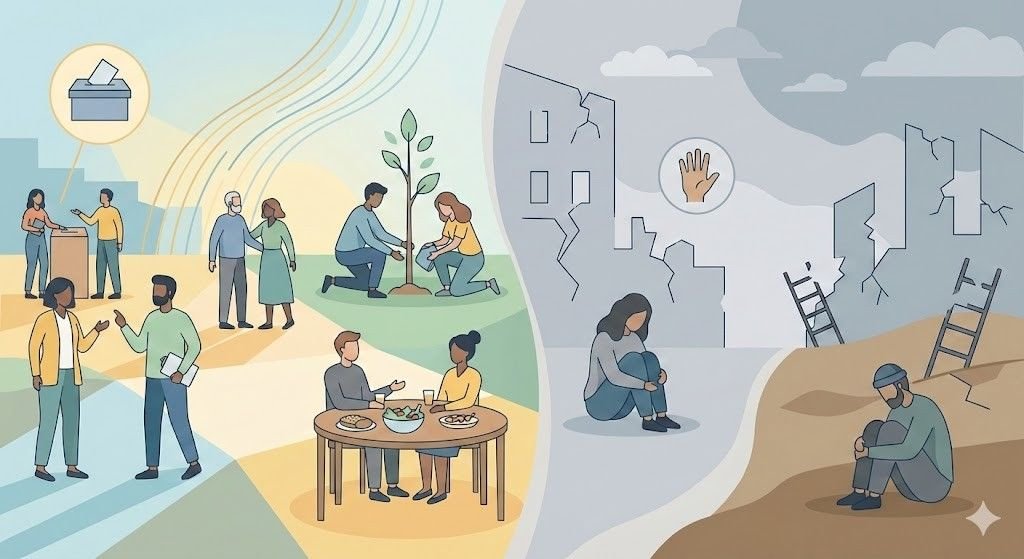
Civic Economics: Reshaping Economic Order and Leading Civilizational Progress
In the world of rapid globalization and technological advancement, traditional economic models are increasingly revealing their limitations. Civic Economics has emerged as an innovative discipline that integrates economic development with social responsibility, aiming to guide humanity toward a new economic system based on the identity of social citizens.
By focusing on social participation and economic empowerment of citizens, Civic Economics not only offers new perspectives on economic growth but also unveils new directions for modern civilizational progress.
The Role of Citizens in the Economy
Civic Economics emphasizes the active role of every citizen as a participant in the economic system. It advocates for borderless and unrestricted citizen investment, granting individuals the right to participate and make decisions in global economic activities beyond geographical and identity constraints. Citizens can invest in a wide range of entities, including nations, businesses, social organizations, and even individual projects and local restaurants. This proactive decision-making permeates all aspects of economic life.
This economic theory seeks to dismantle the monopolization of economic resources by a few, promoting equitable wealth distribution. By fostering innovative models such as social enterprises and social finance, Civic Economics creates conditions for citizens to truly take charge of their economic destinies.
A New Direction for Economic Development: Sharing and Inclusion
Traditional economic models often prioritize capital accumulation and resource maximization, leading to social issues such as resource waste, inequality, and environmental degradation. Civic Economics proposes a new approach that values the contributions of economic activities to human welfare and the collective good. It champions a model of shared and inclusive economic activities, driven by the needs of individuals while promoting public interests. The development of AI further enhances the feasibility of this approach.
At the core of Civic Economics is the growth of social enterprises and social finance, transforming capital into a shared wealth source rather than a tool for the enrichment of a few. This model fosters a diverse and inclusive economic ecosystem, supporting small businesses and startups while providing ordinary citizens with greater opportunities to engage in economic activities, allowing them to become the masters of the economic system rather than passive consumers.
Driving Civilizational Progress: Social Responsibility and Global Perspective
Civic Economics contributes to civilizational progress by promoting a sense of social responsibility and a global perspective. As humanity becomes increasingly globalized and ecological crises intensify, there is a growing awareness that national boundaries blur in the face of global interests. Civic Economics responds to this trend by encouraging citizens to consider not only their interests but also their responsibilities to the global community.
This ideology fosters the rise of a “global citizen” consciousness. Guided by this awareness, individuals make economic choices based not merely on profit maximization but on how their decisions contribute to social progress, ecological balance, and the overall welfare of humanity. Through this lens, Civic Economics becomes a crucial driving force for modern civilizational advancement, elevating human civilization on both material and spiritual levels.
Overcoming the Limitations of Capitalism: A Value-Driven Approach
Traditional capitalism, centered on profit and growth, has facilitated the Industrial Revolution and rapid economic expansion but has also perpetuated profound inequality worldwide.
Civic Economics offers a different economic value perspective, prioritizing the creation of social value over mere capital appreciation. This emerging economic theory disrupts the concentration of power and wealth, providing every citizen with opportunities to realize their potential and contribute to collective societal growth.
In this sense, Civic Economics is not only a reflection on the capitalist economic model but also a revolutionary alternative. By focusing on social value, it redefines financial and economic tools as instruments for achieving social justice and personal fulfillment. By empowering citizens with greater economic participation rights, Civic Economics seeks to build a more equitable and harmonious economic system, laying a solid social foundation for future economic development.
A Blueprint for a Civilized Economic System: Sustainability and Social Welfare
The future of civilizational progress hinges on sustainable development, and Civic Economics plays a pivotal guiding role in this area. Sustainability encompasses not only environmental protection but also a shift away from economic models reliant on overconsumption, waste, and pollution.
Civic Economics advocates for prioritizing social welfare in economic actions, combining economic development with environmental protection and social equity to create a more balanced and responsible socio-economic system. In this future civilized economic system, citizens will be active participants in economic activities and decision-making processes, focusing not only on current economic growth but also on the interests of future generations. By equipping people with a deeper understanding of economics and broader opportunities for engagement, Civic Economics nurtures “civilized citizens” with long-term vision and social responsibility.
Conclusion: A Bridge to Our Shared Destiny
The ultimate goal of Civic Economics is to realize a new economic civilization that integrates economic development with civilizational progress, guiding human society toward a shared destiny.
In this new economic civilization, everyone will not only enjoy economic freedom but also bear the rights and responsibilities of making choices from the perspective of the global community. This transformation of economic systems and civilizational values will pave the way for a more beautiful and just future, providing contemporary and future citizens with a bridge to a shared destiny.