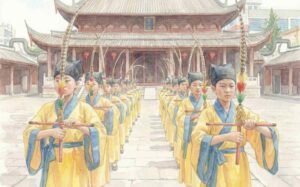
Every step forward in civilization has been guided by the light of education. Education does more than shape individuals—it molds entire eras. It is the foundation that determines whether a society remains stable or transforms, whether power is balanced or abused.
In free and democratic societies, education is seen as the key to awakening public awareness, protecting human rights, checking political power, and advancing social justice. But in authoritarian regimes, education is repurposed as a tool of control—used to train obedience, maintain the system, and suppress the truth.
As Aristotle once said, “The fate of empires depends on the education of youth.” In a dictatorship, education loses its role as the light of civilization. It becomes a weapon—used by the ruling class to break down personal freedom, reshape identity, distort thinking, and turn citizens into mental servants.
This article offers a systematic analysis of why authoritarian states reject democratic education, how they build a corrupted system of schooling, what kind of content and personnel they rely on, and how they raise generations of citizens with damaged cognitive abilities.
This analysis draws on historical patterns observed across various times and places, without reference to any particular nation.
Why authoritarian regimes reject democratic education
At the heart of democratic education lies a simple yet powerful idea: during the formative years of a person’s life, education should cultivate independent thinking, critical reasoning, rational understanding, and an awareness of rights. This is done through the transmission of knowledge, the awakening of values, and the shaping of character.
Once exposed to democratic education, people may begin to develop:
- The ability to tell right from wrong and to see through lies
- The right to voice opinions and participate in public life
- The awareness to question authority and challenge injustice
- The capacity to tolerate diverse values and different ways of life
Democratic education is to a free society what sunlight is to plants, or air to life itself—without it, civilization withers and society decays.
The Abyss Kingdom, as a typical authoritarian regime, is built on absolute power, strict control of information, and total public obedience. If democratic education is introduced, people begin to develop awareness of their rights, critical thinking, historical reflection, and the ability to question the system. This directly threatens the legitimacy of authoritarian rule.
Democratic education threatens to undermine the three core supports of authoritarian rule:
- Monopoly over historical truth: Democratic education encourages the search for truth and the restoration of historical reality. In contrast, authoritarian regimes rely on rewriting history, covering up past atrocities, and constructing myths of national glory to maintain control.
- Myth of sacred power: While democratic education teaches that power must be held accountable and serve the people, authoritarian systems depend on deifying leaders and promoting the idea that power is above question.
- Climate of fear: Democratic education fosters courage, encourages critical thinking, and breaks down fear. But fear is essential to authoritarian governance—it maintains obedience through intimidation, surveillance, and psychological conditioning.
Once education moves beyond basic technical skills and enters the realm of history, philosophy, politics, law, ethics, or sociology, it inevitably raises questions about power and legitimacy. Intellectual awakening fosters individual reflection and collective awareness—forces that authoritarian systems find deeply destabilizing.
Therefore, authoritarian regimes must sever all pathways to genuine intellectual enlightenment. In its place, they promote only what serves the system: fake truths, fragmented teachings, and ideologically sanitized content. Democratic education is not just unwelcome—it is banned outright. Because once minds begin to awaken, the regime’s grip on power begins to crack.
The four pillars of education in the Abyss Kingdom
After cutting off democratic education and halting intellectual enlightenment, authoritarian regimes must construct a closed, coercive, and systematic model of dark education designed to reshape human cognition, emotion, personality, and values into a form that serves authoritarian power.
1. Education for ignorance
The primary goal of ignorance-based education is to disrupt the development of a complete and independent worldview by erasing, distorting, or withholding critical knowledge. The result is a population left cognitively impaired, deprived of the tools needed to understand their world.
Measurements:
- Erasing historical truth: rewriting or concealing records of tyranny, massacres, and repression, while fabricating illusions of “great leaders” and “national rejuvenation.”
- Hollowing out the humanities: minimizing or eliminating philosophy, ethics, political science, sociology, and legal studies—preserving only technical or natural sciences that pose no threat to the regime.
- Injecting false knowledge: promoting pseudoscience, fake history, and conspiracy theories such as ethnic supremacy, leader-worship, or hostile foreign plots.
- Banning critical thinking: removing courses on logic, dialectics, or analytical reasoning to prevent the development of rational and independent minds.
Effects:
- A population with weakened cognitive abilities and poor judgment
- Public thought confined to the artificial framework created by state propaganda
- Knowledge transformed from a tool of empowerment into a weapon of subjugation
2. Hatred-based education
Hatred-based education works by dividing people into “us” and “them.” It deliberately fuels nationalism, class resentment, and hostility toward the outside world. The goal is to shape citizens who are narrow-minded, aggressive, and emotionally unstable—easier to control and quicker to obey. By stirring up fear and anger, the regime can redirect public frustration, maintain social pressure, and protect its own grip on power.
Measurements:
- Demonizing the “enemy” in textbooks: portraying foreign powers, dissidents, spies, and critics as national threats.
- Creating online scapegoats: flooding public discourse with labels like “foreign hostile forces,” “traitors,” or “cultural pollution” to fuel resentment toward alternative views.
- Promoting a victim-revenge narrative: emphasizing historical victimhood and the need for revenge, keeping the public in a heightened emotional state of persecution and retaliation.
Effects:
- A population prone to paranoia, hostility, and ideological rigidity
- Internal conflicts are deflected outward, helping the regime preserve “stability.”
- Citizens begin to police each other, turning into enforcers of ideological purity.
3. Fascist education
Fascist education demands absolute loyalty and worship of power, the leader, and the nation. It completely denies individual dignity and values, and dissolves personal will into the “state,” the “leader,” and the “national destiny.”
Measurements:
- Mandatory courses from kindergarten through university that indoctrinate leader worship, political doctrine, and loyalty oaths.
- Leader portraits, regime slogans, and songs of loyalty displayed prominently in schools, with regular or surprise group recitations and performances.
- Systematic removal of concepts like free will, human rights, and individualism from curricula, replaced by moral teachings emphasizing “self-sacrifice” and “obedience to the collective.”
Effects:
- Uniformity of personality, loss of individual will, and aesthetic degradation
- Individual cognition, emotions, and will become dependent on authoritarian power.
- A breeding ground for mass extremism, fueling fascist regimes with devoted human resources.
4. Slave education
The ultimate goal of slave education is to strip individuals of free will and independent personality, cultivating obedient subjects who lack thought, resistance, and self-esteem.
Measurements:
- Promoting the idea that “a good child is an obedient child.”
- Discouraging independent thought; punishing students who voice personal opinions.
- Encouraging a culture of surveillance—reporting on peers and family, engaging in public self-criticism—to destroy trust and enforce submission.
- Embedding covert doctrines such as “individual interests must yield to the state,” “the leader is always right,” and “to oppose the leader is to betray the nation.”
Effects:
- People become psychologically dependent on authority, losing self-respect and free will.
- Critical thinking atrophies; obedience becomes instinctive.
- Society is filled with compliant followers, informants, blind loyalists, and those unable to think independently—conditions ideal for sustaining totalitarian rule.
Content engineering and operational mechanisms of education in the Abyss Kingdom
Every education system relies on content—but in an authoritarian regime like the Abyssal State, this reliance becomes a tool of control. To construct a stable and long-lasting cognitive cage, the regime must systematically produce and manage educational materials that suppress independent thought, erase critical awareness, and normalize submission and hatred. The state monopolizes knowledge production and narrative power by carefully designing what can be taught, remembered, and imagined.
The creation of these materials goes far beyond textbook editing. It is a deliberate, long-term operation coordinated by state propaganda and ideological departments. The result is a tightly controlled set of narratives and concepts—psychological weapons designed to shape how people think, what they fear, and whom they obey. The regime uses seven core strategies to construct this indoctrination system:
1. Distorting historical facts
History education forms the foundation of a society’s collective understanding. In authoritarian regimes, it is always the first target of manipulation. The crimes of the ruling elite are repackaged as wisdom, resistance is slandered as treason, and brutal crackdowns are whitewashed as righteous victories.
In the Abyssal Kingdom, history is never a record of truth—it is a tool of control. Indoctrination begins with the systematic rewriting of historical textbooks. Any part of the past that might expose injustice, tyranny, or failure is deleted, distorted, or buried beneath patriotic gloss.
Common strategies:
- Erasing massacres, purges, and crackdowns, and replacing them with narratives of “glorious triumphs.” Atrocities are reframed as “necessary sacrifices,” and public suffering is rebranded as “the price of national revival.”
- Deifying dictators as “national heroes,” “wise leaders,” or “saviors of the people,” while concealing their brutality and disastrous decisions.
- Erasing grassroots heroes, dissident voices, and stories of civil resistance. Uprisings are redefined as “riots” or “acts of terrorism.”
- Shifting the blame for famines, internal power struggles, and failed policies onto “hostile foreign forces” or “uncontrollable circumstances.” Any record of independent intellectuals or critical thinkers is wiped from memory.
- Constructing an official “national history” with a single, approved narrative. Independent publications and non-state archives are banned; no alternative version of history is allowed to exist.
Effects:
- Public understanding of their nation and identity is reshaped into a false myth of “suffering–redemption–national greatness.”
- The right to reflect real history is entirely stripped away, and historical lessons are severed from collective memory.
- By controlling historical narratives, the Abyssal State cuts off all access to authentic past experiences, ensuring that the people remain trapped in a fabricated mythology of “glorious prosperity” and the illusion of “historical inevitability.”
2. Pseudoscience and false doctrines
The Abyss Kingdom infuses its education system with widespread pseudoscience and fabricated ideologies—outside the realm of natural science—as tools of thought control. These constructs are designed to reinforce leader worship, myths of national superiority, fatalism, and conspiracy theories targeting supposed enemies.
Common false doctrines include:
- The myth of ethnic superiority
- The dogma of state infallibility
- The narrative of foreign manipulation
- The cult of the supreme leader
- The ideology of collective submission as destiny
These narratives are dressed up as philosophy, political theory, or social science, giving them a veneer of legitimacy while concealing their inherent absurdity.
Effects:
- The public loses any stable criteria for rational judgment and becomes accustomed to living within lies.
- Critical thinking is systematically prevented from ever taking root.
3. Creating fake heroes and false idols
Another core tactic of dark education is the mass production of fake heroes and false role models. These figures replace genuine public role models and are used to create a system of idols for the people to worship and rely on emotionally.
Common strategies:
- Rewriting history to highlight national humiliation and danger, while turning dictators, elite families, and loyal enforcers into “national heroes” and “moral examples.”
- Inventing stories of fearless, loyal “martyrs” who die for the regime. These myths are repeated in textbooks, movies, and public events.
- Erasing real thinkers, critics, and independent voices from history. Only “loyal soldiers” and “defenders of the state” are allowed to exist in the public memory.
- Demonizing enemies and dissidents. Promoting “model citizens” who are celebrated for their loyalty, violence against opponents, and service to authoritarian rule.
Effects:
- People live in a constant state of fear, hatred, and blind obedience.
- Violence and intolerance are seen as virtues.
- Citizens are led to believe that following orders, suppressing conscience, and hating outsiders is heroic. This blocks any path to critical thinking, personal growth, or truth.
4. Glorifying the leader
A key part of blackened education in the Abyss Kingdom is turning the leader into a perfect, untouchable figure.
- Write books that make the leader look like a hero or legend.
- Claim the leader was “born with a sign” or “chosen by destiny.”
- Treat every word the leader says as a rule or great truth.
- Broadcast daily news about the leader’s actions, quotes, and so-called miracles.
Effects:
- People gradually develop blind admiration and emotional dependence on the leader.
- Independent thinking weakens, and critical judgment is replaced by loyalty.
5. Teaching the “correct” values
The Abyss Kingdom’s education system aims to shape one single way of thinking, leaving no room for freedom, diversity, or critical thought. All lessons, textbooks, and media campaigns must promote state-approved values.
Common strategies:
- Define “loyalty to the state,” “obedience to authority,” and “self-sacrifice” as the highest virtues.
- Promote ideas like “the collective comes first,” “the state’s interest always comes before the individual,” and “dissent equals disloyalty.”
- Label concepts like freedom, human rights, democracy, and equality as foreign threats or hostile conspiracies.
- Force students to memorize political slogans, take loyalty pledges, and participate in staged political events.
- Portray curiosity, independent thinking, and critical reflection as dangerous to national stability.
Effects:
Young people grow up without the chance to form independent minds. Instead, they become obedient, passive, and unquestioning—ready to serve the system without resistance and even help enforce it on others.
6. Thought control and the system of forbidden words
In an authoritarian system, the final line of defense in education is strict control over thought. The goal is to completely block any idea, word, or memory that could challenge the regime. This is done through a mix of laws, censorship, and social pressure that gradually shrink the space for public thinking.
How it works:
- A constantly updated blacklist defines which historical events, people, concepts, or political terms are considered “controversial” or “dangerous.”
- Textbooks and classrooms avoid topics like freedom, democracy, human rights, rule of law, or historical trauma, to prevent independent thinking.
- All academic content must go through official approval. Teachers are banned from using unapproved materials, and research topics are tightly controlled.
- A cross-platform censorship system reviews everything from books and films to social media, deleting or punishing anything that does not match the state’s ideology.
- Peer surveillance is encouraged. Students are urged to report teachers or classmates, creating an atmosphere of fear and mistrust.
But the real power of this system lies not in the visible bans—it lies in the fear it creates. People begin to censor themselves. Over time, they no longer even think about the forbidden.
A society where critical thinking disappears, and only two emotions are allowed: obedience, or hatred for the “enemy.”
Education no longer shapes free, responsible individuals. It produces citizens who are either hateful, passive, or blindly loyal—exactly what the Abyss Kingdom needs to maintain its rule.
The construction and conditioning of dark education personnel
To sustain a long-term authoritarian education system like that of the Abyss Kingdom, it is essential to build a teaching force that is fully loyal, carefully shaped, and ideologically aligned with the regime.
In this system, educators are no longer independent thinkers or mentors, but carefully selected and trained to become instruments of ideological transmission. Their role is not to encourage curiosity or critical thinking, but to deliver a specific narrative and suppress alternatives. They serve as amplifiers of official ideology and enforcers of intellectual conformity.
Such educators are not expected to be scholars or guides for growth, but rather function-driven personnel shaped to meet the following criteria:
- Obedient personality: Committed to following authority without question, avoiding personal interpretation or dissent.
- Limited exposure: Educated almost entirely within the regime’s framework, often lacking familiarity with ideas such as democracy, freedom, or universal rights.
- Moral compromise: Taught to prioritize loyalty to the system over concerns about fairness or truth, often turning a blind eye to manipulation or suppression.
- Emotional detachment: Conditioned to remain neutral, or even indifferent, when students experience confusion, fear, or frustration under ideological pressure.
- Surface professionalism: Often appear friendly and dedicated, but use their role to subtly enforce ideological discipline rather than open dialogue.
Selection and conditioning mechanisms
- In order to ensure long-term ideological alignment, authoritarian education systems implement strict screening processes to filter out dissent from the very beginning.
- This often includes background checks designed to exclude individuals from families or environments associated with liberal or critical thinking.
Even after this initial filtering, the system continues to shape educators through ongoing ideological training. The goal is to gradually erode independent thinking and reinforce loyalty to the dominant narrative. This process is often subtle, relying on institutional culture and management practices rather than overt coercion.
Methods of conditioning include:
- Teachers are regularly required to attend “ideological study sessions” or “political education workshops,” where they repeatedly review official doctrines and submit personal reflections, creating a structured process of internalization.
- The workplace often includes mechanisms like anonymous reporting, mandatory “self-criticism” and peer reviews, which undermine mutual trust and strengthen top-down control. Group rituals such as “value-sharing sessions” or “model teacher showcases” help normalize conformity and visible expressions of loyalty.
- For those who still try to maintain independent thought, the system often applies indirect pressure—through marginalization, job reassignment, or public criticism—until they either conform, remain silent, or eventually leave. Over time, the profession becomes a kind of self-selecting environment: the ones who stay are those best adapted to its expectations.
Long-term impact
- This approach leads to a narrowing of thought and the loss of diverse voices in education.
- Teachers are no longer seen as guides who inspire critical thinking, but rather as enforcers of rules and repeaters of official narratives. As a result, the educational environment becomes less creative and less reflective, conditioning students to obey rather than question.
- The authoritative culture reinforced through the control of teachers gradually shapes students’ perception of power. It makes them more likely to accept rigid hierarchies and view authority as something that must not be questioned. In this way, education shifts from being a force for social progress to becoming a tool for maintaining the status quo.
Training professionals in ideological conditioning
In a deep authoritarian system, there often exist secretive institutions—such as political loyalty colleges or ideological training academies—dedicated to producing specialists in cognitive manipulation.
- Mass psychology and communication theory, used to analyze public sentiment and how people absorb information
- Crisis messaging and narrative control, to manage public opinion during emergencies
- Nation branding and leadership image design, which involves creating emotional loyalty and symbolic representations of authority
- Social stratification modeling, including techniques to foster in-group/out-group tensions and mobilize collective hostility
After graduation, these professionals often take on roles such as:
- Working within national-level propaganda, media, or education planning agencies to shape ideological messaging and communication strategies
- Monitoring public opinion and implementing “thought safety” protocols to identify and suppress dissent
- Redesigning public discourse—rewriting history, building political consensus, and weakening critical engagement
- Developing simplified narratives and emotionally charged slogans to increase acceptance and reduce public capacity for complex, independent thinking
Outcomes of indoctrinative education
This kind of education does not raise free-thinking, well-rounded individuals. Instead, it trains people to stop thinking for themselves and become mentally dependent on authority.
Over time, through constant brainwashing and emotional pressure, the system shapes people into four common types. These are not accidents—they are exactly what the system wants, because they help keep the authoritarian system in place.
1. Cognitively limited individuals
Cultivation mechanism:
- From a young age, they are taught only one way to see the world, without exposure to different ideas or cultures.
- Textbooks are full of rewritten history and made-up stories, making it hard to tell what is true or false.
- Political slogans are repeated so much that critical thinking and abstract reasoning never develop.
- Reasoning, debate, and philosophical questions are discouraged. Students are expected to just follow orders and show loyalty, relying on emotions instead of logic.
Results:
People raised this way lose the ability to think for themselves or make their own judgments. When faced with complex issues, they get confused or avoid thinking deeply. They tend to trust authority or mainstream stories without question. Although they can learn and work, they lack critical and independent thinking, making them easy to control and turn into obedient followers.
2. Emotional damage caused by toxic education
Definition: People whose emotions become distorted due to long-term exposure to hate, loyalty brainwashing, and fear control. They struggle to feel empathy or care and may see violence and oppression as normal or even right.
Cultivation mechanism:
- From childhood, they learn to divide the world into “us” and “them,” becoming suspicious or hostile to different views or cultures.
- Violence is framed as “just” or necessary, weakening respect for peace and inclusivity.
- Schools reward loyalty by encouraging political activity or reporting others, pushing conformity and aggression.
- Emotional expression is discouraged, while cold logic is praised, suppressing empathy and warm communication.
Results:
They become numb to others’ pain, participate in hate and violence easily, and form the emotional foundation that keeps an oppressive system stable.
3. loyal mental servants
Definition: People fully accepting the regime’s logic, seeing obedience and loyalty as their highest values, losing independent will and identity, and willing to devote their lives to the system.
Cultivation mechanism:
- Forced political education, loyalty oaths, and collective rituals erase personal identity.
- Role models and idol worship teach that sacrificing for the regime is honorable.
- Free thinking is criticized; ideas like “obedience above all” and “national interest first” are enforced.
- Rewards, promotions, and honors make loyalty seem like the only right path.
Results:
Mentally dependent on authority, they lose independent judgment and only know how to “follow orders.” They lack resistance and often actively support the regime, becoming the regime’s most stable social base.
4. Ideological enforcers
Definition: Citizens shaped by authoritarian education to monitor, report, and suppress dissent. They do not just follow the rules—they actively participate in maintaining ideological control and policing public opinion.
How it happens:
- From a young age, children are taught to report on classmates or teachers.
- Titles like “model of loyalty” or “thought leader” reward those who report others, turning surveillance into a form of achievement.
- Education sharpens suspicion toward alternative views, teaching people to treat dissent as a threat.
- Constant warnings about “hostile forces” and “social instability” instill fear and normalize mutual surveillance.
Results:
These individuals become the regime’s eyes and ears within society. By monitoring others and reporting any nonconforming opinions, they create an atmosphere of fear and self-censorship—strengthening authoritarian control from the ground up.
Core traits of the cognitively limited
Those shaped by blackened education may appear educated and capable in daily life—they can drive, use smartphones, shop online, even pass political exams. But their thinking is deeply distorted, shaped by years of mental conditioning:
- They lack a full understanding of history, often absorbing edited or simplified versions. This makes it hard for them to tell truth from fiction. As a result, they tend to glorify national leaders and overlook systemic flaws or mistakes.
- Their ability to think critically is weak. They struggle with cause-and-effect reasoning and rely heavily on official narratives to make sense of the world. Alternative viewpoints feel threatening or confusing.
- Personal and social issues are often blamed on vague “enemy forces.” They show little tolerance for dissent or diversity of thought, and can be hostile toward those who question the status quo.
- A strong sense of fatalism runs through their worldview. They believe personal destiny should serve the interests of the state and tend to accept injustice or oppression as inevitable.
- Their way of speaking is limited—they tend to repeat official slogans and lack original thought or personal voice.
Eventually:
They function well in a technical sense, but they are unable—or unwilling—to grasp the deeper realities of power, society, or human dignity. For an authoritarian regime, they represent the ideal subject: obedient, unquestioning, and intellectually domesticated.
The social function of mental slaves
In an authoritarian society, some people go beyond simply obeying. They become loyal followers—those who truly believe in the system, defend it without question, and even help spread its control over others.
What they do:
- Watch and report: They report anyone around them—friends, coworkers, neighbors—who they think has “wrong” ideas.
- Attack online: They spread lies, attack people with different opinions, and try to silence voices that speak of freedom or truth.
- Repeat the system: At school, work, or home, they pass on the same ideas they were taught, discouraging new thinking in the next generation.
- Join by choice: They take part in political rituals, repeat slogans, and proudly serve the system, convinced that the leader is always right.
Their features:
- They fear the truth and dislike freedom.
- Their words sound empty, like they are repeating a script.
- They are polite to the powerful, but cruel to those with no power.
They enjoy helping the system punish people who speak out.
The most dangerous part of this kind of education is that it does not stop people from learning completely. Instead, it teaches them only what the system wants—how to pass tests, do technical work, or follow orders—while keeping them away from ideas like fairness, justice, or free thinking.
Long-term impact
- Over time, people’s minds are locked inside the narrow “acceptable zone” of thought defined by the regime. Any ideas beyond that trigger fear, anger, or rejection.
- They become obedient tools within the system—enforcers of everyday violence, online trolls, and spreaders of hate.
- When an entire population suffers from this kind of cognitive damage, the society falls into a cycle of ignorance and repression—making authoritarian rule seem natural and permanent.
This is the most cunning success of authoritarian education: it trains people to never use their brains.
How authoritarian education operates
Authoritarian education keeps the public in a state of cognitive dissonance, reinforcing what is known as doublethink—the ability to believe two contradictory ideas at the same time without feeling any inner conflict. The system achieves this through the following tactics:
- 1. Imposing logical contradictions:People are taught to accept two conflicting ideas as if they are perfectly compatible. For example, citizens are told that “freedom must be restricted,” while also being made to believe that “the ruler holds supreme wisdom and authority.” These opposing messages are presented as truth, and questioning them is discouraged.
- 2. Applying social pressure: Through group psychology, collective pressure is used to reinforce so-called “social consensus.” Anyone who expresses a different view is publicly shamed or excluded, pushing individuals to conform—often against their own reasoning. Over time, they internalize the regime’s warped logic as reality.
Outcome: People become mentally trapped, accepting contradictions as normal. They lose the ability to think critically or independently, and gradually turn into instruments of the regime’s cognitive control.
At the same time, authoritarian education relies on cognitive violence to force people into obedience—often without them even realizing it—eventually enslaving their minds. This is achieved through several key methods:
- Psychological intimidation and terror tactics: By instilling fear—such as the idea that “any resistance could cost your life”—people are pushed into constant self-censorship. The widespread fear keeps everyone silent and compliant.
- Thought control and behavioral correction: Mandatory activities like “thought reports,” ideological inspections, and compulsory political education force individuals to constantly examine and criticize their own minds for “dangerous thoughts.” Over time, this leads to emotional exhaustion and internalized fear, where people begin to police themselves.
- Self-monitoring and mental isolation: Education implants fear and self-doubt so deeply that people stop thinking independently. They surrender to the official narrative and allow it to shape every aspect of their thoughts and behavior—becoming, essentially, slaves of the system.
Outcome: This kind of cognitive violence creates a society filled with fear and repression. Through psychological manipulation, the regime builds a population that is deeply obedient—yet rarely even aware of how deeply they have been controlled.
The global expansion of authoritarian education
Authoritarian education is not just a domestic phenomenon confined to a single nation—it has the potential to expand and take root globally. Its methods can be exported, infiltrating the political, cultural, and educational systems of other countries.
As globalization accelerates, authoritarian regimes may extend their control over education beyond their own borders, using various channels to influence public opinion and shape how people think. This marks the beginning of a broader push toward cognitive dominance on a global scale.
1. Expansion mechanisms
The spread of dark education relies on several key strategies:
- Exporting ideology: Authoritarian states promote their educational models abroad through political and economic aid, as well as cultural exchange. In many cases, developing countries that receive financial support are also expected to adopt educational systems that diverge from their own cultural values. This paves the way for authoritarian ideologies to take root globally.
- Cultural industry infiltration: Through films, television shows, and online content, authoritarian regimes embed their values into cultural products consumed worldwide. These ideas quietly enter everyday life, subtly shaping how people in other countries think and view the world—without them even realizing it.
- Use of international organizations and political alliances: Authoritarian governments seek influence within institutions like the United Nations, forging alliances and pushing for international acceptance of their political education models. In doing so, they attempt to shape global education standards to reflect their own ideological framework.
The result: The global education landscape faces increasing pressure from cognitive manipulation driven by authoritarian forces. Traditional values of liberal education—such as critical thinking, diversity, and individual freedom—risk being pushed to the margins, challenged by a rising tide of centralized control and thought conformity.
2. The rise of global cognitive hegemony
Through the expansion of dark education models, authoritarian regimes are not only consolidating ideological control within their own borders—they are also working toward establishing a global cognitive hegemony. This trend manifests in several key ways:
- Shaping a global cognitive framework: By delievering culture, influencing international media, and interfering with educational systems abroad, authoritarian states are constructing a global narrative where their model of governance becomes the benchmark. In this framework, values like freedom, equality, and democracy are pushed to the margins, replaced by notions of “national loyalty” and “leader worship” promoted by these regimes.
- Control over global information and education: As authoritarian powers gain influence over the infrastructure of the global internet and collaborate with multinational corporations and international media outlets, they are increasingly able to shape the global flow of information. This enables them to spread ideologically aligned narratives while suppressing dissenting voices, gradually creating a unified worldview centered around authoritarian values.
- The politicization of educational standards: Global educational norms and practices may come under the sway of authoritarian influence. Academic journals, international education conferences, and curriculum development initiatives risk being steered by political agendas, embedding authoritarian logic into the very fabric of global education discourse.
The consequences: Freedom of thought and intellectual innovation may face widespread suppression. As cognitive hegemony takes hold, political, cultural, and philosophical diversity across nations will diminish—leaving the global community increasingly dependent on, and aligned with, authoritarian worldviews.
3. Cultural homogenization and the erosion of indigenous identity
As this dark education models expand globally, the diversity of local cultures and traditional values faces an existential threat. The spread of authoritarian educational frameworks contributes to:
- Accelerated cultural homogenization: By controlling the cultural industries, education systems, and information channels, authoritarian regimes aggressively promote a singular set of values—erasing differences and imposing conformity.
- Loss of cultural and intellectual autonomy: Under the weight of this globalized pressure, people around the world are losing the ability to freely choose their own cultural identities and ways of thinking. Instead, they are pushed into adopting a one-size-fits-all worldview that leaves little room for individuality or authentic self-expression.
- Disappearance of traditional cultures: Authoritarian education, by its very nature, is coercive and repressive. It destroys the soil in which local traditions and free thought once thrived. As creative thinking and resistance are gradually eliminated, cultural diversity is reduced to a distant memory.
The consequence: The world risks entering an era of cultural barrenness, where unique traditions and diverse philosophies fade away. In their place emerges a single, authoritarian global culture—uniform, unchallenged, and unfree.
4. The global rise of dark education alongside social control
The spread of dark education is closely tied to the expansion of global social control systems. With advances in technology, authoritarian regimes can now exercise remote control over societies worldwide through several key means:
- Social media and information monitoring: The widespread use of the internet allows authoritarian states to track and control speech and behavior globally in real time via social media platforms, search engines, and data surveillance tools.
- Transnational political and economic alliances: By forming cross-border alliances and leveraging economic aid and technological partnerships, authoritarian countries tighten their grip on other nations’ education systems, forcing the adoption of their dark education models.
- Global digital cultural education: Using AI, big data, virtual reality, and other cutting-edge technologies, authoritarian regimes are building a worldwide virtual education network. This system delivers tailored dark education content designed to manipulate and brainwash populations over the long term.
Consequences: Unnoticed by most, the world is slipping into an era of all-encompassing cognitive control. People everywhere face constant surveillance and ideological manipulation. Authoritarian influence will become unavoidable, shrinking the freedom of thought across the global intellectual landscape.
Hope and challenges for the future
As the dark education model continues to spread across the globe, movements of resistance gradually emerge, engaging in a worldwide struggle for free thought and liberating education. Despite the seemingly overwhelming power and reach of dark education, history has shown that the forces that suppress thought and learning are ultimately shortsighted—and never invincible.
Resisting dark education is not only a historic mission. It is also a responsibility shared by every generation—to defend freedom, pursue truth, and safeguard the spirit of innovation.
1. The rise of resistance: rebuilding global thought and education
Despite the global wave of authoritarian, dark education, more and more thinkers, educators, and ordinary people are rising up to speak out and resist this ideological oppression. This growing resistance is rooted in a deep commitment to human freedom and individual dignity, and it is driven by several core principles:
- The return of free thought: the resistance calls for the revival of open, unrestricted thinking. A truly free educational system must break away from authoritarian constraints and create a space that welcomes open inquiry, critical thinking, and creative exploration.
- Diversity and inclusion in education: opponents of dark education advocate for diverse and inclusive educational systems that respect different cultures, values, and ways of understanding the world. Real education should cultivate independent, critically minded citizens—not uniform thinkers trained for obedience.
- Social engagement and awakening: this movement emphasizes the importance of civic participation. Through social activism, digital platforms, and cultural exchange, it seeks to raise awareness about the dangers of authoritarian education. The goal is to awaken individuals and communities alike to rethink the true purpose of education—and to reject systems that erode human dignity and intellectual freedom.
The rise of this resistance is not just a direct challenge to dark education; it also offers hope for a renewed global vision of education. Through shared ideas and collective action, the grip of authoritarian education may slowly loosen, and a new dawn of liberated learning may begin to emerge.
2. Breaking the grip of authoritarian education
To effectively dismantle the grip of authoritarian education, reformers must pursue a comprehensive transformation of the educational system across multiple levels. Key strategies include:
- Redefining the purpose of education: education must shift its purpose from obedience to empowerment. It should foster independent thinking, curiosity, and the courage to question.
- Embracing diversity in education: one-size-fits-all education models often serve political interests. To counter that, we need diverse, inclusive learning systems that reflect the complexity of our world. Multicultural education, interdisciplinary learning, and a global outlook can help students develop nuanced perspectives, encouraging them to think for themselves rather than inherit narrow ideologies.
- Empowering teachers as change-makers: teachers are not just deliverers of content—they are shapers of culture and consciousness. Reform depends on a new generation of educators who are deeply aware of their role in society. These teachers must be equipped—and encouraged—to champion intellectual freedom, ethical integrity, and the lifelong pursuit of truth.
- Using technology to open new doors: digital tools offer powerful alternatives to centralized, controlled education systems. From online courses and open-source platforms to global learning communities, technology can unlock access to diverse knowledge and break through ideological walls. Used wisely, it allows people everywhere to learn on their own terms.
Successful education reform can gradually reverse the damage done by authoritarian models, paving the way for a more open, diverse, and innovative learning environment. The true purpose of education is no longer to produce obedience and conformity, but to cultivate citizens who think freely, act responsibly, and question the world around them.
Conclusion: the dead end of civilization and the eternal night in the abyssal state
What allows authoritarian regimes to sustain themselves over time is not just control over weapons, resources, or institutions—it is their total control over knowledge and how people think. The system of “darkened education” lies at the heart of this control. It is not merely an educational method, but a comprehensive framework for shaping minds. It spreads through classrooms, textbooks, media, the internet, political rituals, public opinion, and even private conversations, forming an all-encompassing network of cognitive control.
In such a society, knowledge is no longer used to understand the world or seek truth. Instead, it becomes a tool for producing mental dependence and spiritual submission. History is rewritten, heroes are fabricated, values are engineered, hatred is standardized, and independent thinking is shut down. Entire generations grow up under this system—from innocent ignorance, to willing acceptance, to actively defending the system—until they become part of the machinery of oppression, like twisted flowers blooming on the ruins of a lost civilization.
In a truly humane and civilized society, education should awaken reason, pursue truth, and uphold dignity and free will. But in the abyssal state, education is used to numb the mind, train obedience, and breed hatred. When a nation is shaped by such education for three generations or more, the chance of awakening fades away. What remains is a population trapped in spiritual slavery and collective ignorance—a stain on the progress of civilization, destined to be crushed by the force of history and left behind by the times.