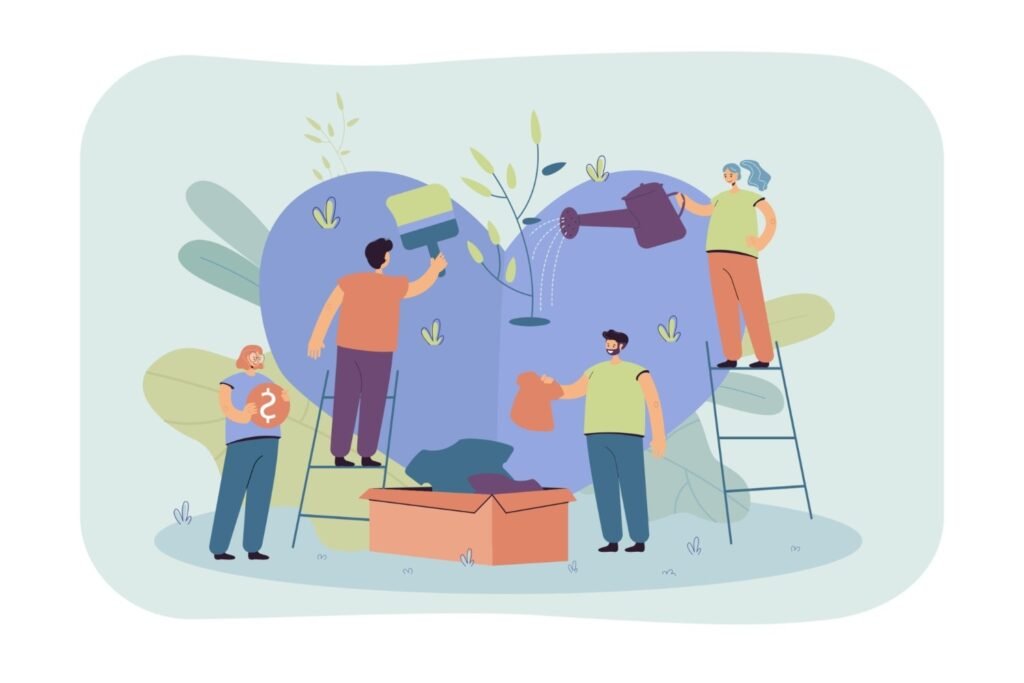
Early human civilization originated from the connection and mutual assistance between humans. At that time, it was the goodwill and cooperation among individuals that enabled them to survive together and move toward prosperity in the face of natural threats. From the collaborative hunting efforts of primitive societies to the public irrigation systems of agricultural civilizations, kindness has been the driving force behind human progress. These historical facts remind us that civilization has never existed apart from the goodwill deeply rooted in human nature.
However, as society has grown more complex, the outer shell of civilization has thickened. Technology, systems, and economic development seem to have replaced kindness as the core of civilization. Humans have begun to rely on indifference or efficiency in handling interpersonal relationships. Yet, it is in moments of crisis that every act of kindness reminds us that civilization is not built solely on rules or technology. It relies more on humanity’s recognition and protection of each other’s intrinsic value. Kindness is not only the original spark of civilization but also the opportunity for its reconstruction after it has broken down.
I. The Power of Kindness: Reconnecting Humanity and Society
The high efficiency and specialization of modern society have led to a growing distance and even indifference between individuals, with people increasingly seen as numbers or tools. However, acts of kindness can break this alienation, and reconnect us with one another and giving society warmth and meaning.
1. Kindness creates trust
Trust is the foundation of a functioning society, and kindness is the beginning of trust. Every genuine act of kindness is an expression of trust—trust in human nature and the potential of society. For example, in Japan, unattended vending stalls are seen as symbols of social trust. People can purchase agricultural products on their own and place the money in a designated container. These small acts of kindness convey the fundamental trust between individuals and create a self-sustaining cycle of social civilization.
2. Kindness relieves conflicts
Kindness is a force that resolves conflicts. It creates new possibilities in interpersonal or societal disputes. When we choose goodwill over indifference or confrontation in moments of opposition, we often open a path to reconciliation for both sides.
A real-life example of this is seen in South Africa after the end of apartheid, where kindness and forgiveness became crucial pillars in rebuilding society. The “Truth and Reconciliation Commission,” led by Desmond Tutu, encouraged perpetrators to confess their truths and seek forgiveness from the victims. This spirit of tolerance and goodwill not only prevented violent retaliation but also allowed society to embark on a new chapter of civilization, characterized by inclusivity and mutual support.
3. Acts of kindness drive social change
Kindness not only heals conflicts but also drives social change. During times of social turmoil or transformation, kindness, as a core value, can lead society toward a new chapter of civilization. Acts of kindness have the power to alter traditional power structures, break down social barriers, and give voice and opportunities to marginalized groups, fostering a sense of collective responsibility. Some actions sparked by individual acts of kindness can ultimately evolve into broader social movements, driving significant change.
For example, Oxfam was originally founded by a group of British citizens to help the starving Greek population during wartime. However, what began as a small act of kindness grew into a global humanitarian organization as more people joined the cause. The power of kindness lies in its ability to resonate with others, transforming individual sparks of goodwill into far-reaching social movements.
II. Kindness is the key to reawakening civilization
History shows that whenever human civilization faces a crisis, kindness becomes the key force in guiding society toward revival. In the face of natural disasters, human-made calamities, or social upheaval, kindness is not just a short-term relief but a long-term force for the reformation of civilization.
1. Kindness mends the fractures of civilization
When disaster or conflict tears apart social bonds, kindness becomes the force that fills the gaps. For example, after the 2004 Indian Ocean tsunami, countless international volunteers flooded into the affected areas, helping to rebuild homes, provide material aid, and offer psychological support. Their selfless actions not only restored the physical environment but also allowed survivors to feel the power of being cared for and connected. Such acts of kindness also sparked renewed confidence and strength in the survivors, becoming the foundation for their rebuilding efforts.
2. Kindness drives the evolution of social systems
Kindness is not only a force for post-crisis recovery but also brings renewal and progress to society. When kindness becomes a collective choice, it gives rise to new social models and forms of civilization.
For example, Finland’s universal basic income experiment is grounded in the idea of goodwill toward all members of society: ensuring no one is left behind. While the experiment remains controversial, it represents another form of institutionalized kindness, seeking to advance social civilization through policy.

III. The practice of kindness: from individuals to institutions
Kindness is not an abstract ideal, but a value that can be practiced through action. The challenge is how to move from the individual to society, making kindness a social norm and a cornerstone of civilization.
1. The power of individual kind acts
Every small act of kindness is nourishment for social civilization. Whether it’s helping a stranger or consciously maintaining order in public spaces, these actions may seem minor, but they can trigger a “chain reaction of goodwill” among people.
Psychological research shows that when people witness acts of kindness, they are often inspired to perform more kind actions themselves. This means that an individual’s kindness can subtly influence their surroundings and even shift the overall social atmosphere.
2. The institutionalization of kindness
Kindness cannot remain solely at the individual level. It needs to be supported through systems and policies to create lasting social support. For example, the Netherlands’ “Neighbors Helping Neighbors” program encourages residents to assist each other in daily life, offering support to the elderly, disabled, and other vulnerable groups. This institutionalized design of kindness not only strengthens the sense of belonging among community members but also enhances the overall social cohesion.
3. The intergenerational transmission of kindness education
The power of kindness needs to be passed down through generations, and education is the most important means of doing so. In countries like Sweden and Finland, school curricula emphasize Social and Emotional Learning (SEL), which fosters empathy, collaboration, and a sense of social responsibility in children. This approach makes kindness a core part of personal growth and social civilization. Through such educational models, kindness not only becomes a habitual behavior but also internalizes as a value. It will drive the transmission of civilization from one generation to the next.
IV. Kindness ignites the future of civilization
Kindness is the simplest yet most profound force. When the world faces isolation, indifference, or division, kindness is our only hope for rebuilding connections and healing social rifts. Every act of kindness is the reopening of civilization and the starting point for humanity’s advancement to a higher level.
The true measure of civilization is not in technological advancements or the accumulation of wealth, but in humanity’s ability to consistently approach one another with kindness and build society on this foundation. Kindness is the purest expression of human nature and the core pillar of civilization. Every act of kindness helps lay the foundation for a brighter future, and each act of kindness carried forward opens a new chapter in the evolution of humanity.
Let us embrace and practice kindness, as it is not just the solution to current problems but also the foundation upon which we build the future.