The Scripture of Eternal Residence of Sacred Heart in Heaven

Avatar photo
Master Wonder · May 18, 2024
Spiritual practice is the practice of kindness, love and compassion. It is the process and result of truly understanding and transcending oneself as well as the world.

The Sacred Scripture in the Heart, also known as the Origin of the Spirit, the Scripture of Sacred Heart of all beings.

In the distant east, there was an angel named Avalokitasvara. One day, while observing and delving into her sacred heart, she discovered that all her thinking and desires were made up of various thoughts.

These thoughts can be fake or true, existing or non-existing, hanging or changing. They can be sensed or not sensed, known or left unknown.

Through this realization, she gained a profound understanding of her authentic sacred heart—a heart capable of free transformation, capable of eliminating all roots of suffering.

By embracing the Sacred Heart, one can transcend suffering and attain eternal joy in heaven.

The Sacred Heart is the gathering of all. It is neither a process nor an end. It can observe both the process and the end.

The Sacred Heart exists forever. It is the eternal unwavering divine light. It empowers every living being to accomplish the transformation from an ordinary person to a saint.

The Sacred Heart is an emptiness that encompasses all the thoughts and knowledge of oneself and others. It allows one to pull away from oneself as well as other beings.

To realize that each and every one of us is with the Lord. That we are in essence nothing different from the Saints. That the heart of the Saints is the same, without any distinction.

To fully recognize that each and every one’s sacred heart is full, perfect and flawless.

The Sacred Heart is always clear, without the distinction between light and darkness, and the distinction between intellect and ignorance.

Long live the Sacred Heart. It does not age, nor does it disappear due to aging.

The Sacred Heart is everlasting. There isn’t birth or death, purity or impurity, growth or decline. It is shown by the emptiness and phenomenon of the heart. It is the origin of souls.

By attaching to nothing, the Sacred Heart will appear. By doing proper deeds, miracles will happen.

When delving deep into the Sacred Heart, there are layers and layers of realizations. Each layer has its own secret.

In this way, one will stay away from all the false perceptions and wrong beliefs, and thus become fearless, until the soul reaches its fulfillment.

All the saints go through the journey that this sacred scripture describes, to attain wisdom and enlightenment.

Therefore, the Scripture of Sacred Heart is the supreme wisdom, the incomparable divine light, the sacred mantra, the glorious mantra, and the mantra of wisdom.

Thank Lord. Praise all the saints. Gratitude to the angel of the East for unveiling the paths of wisdom and enlightenment to us. Let us persist in our endeavors, for the love of the Lord is with us. Let’s worship the merciful saints.

Gate! Gate! Pāra-gate! Pārasaṃ-gate! Bodhi. Śvāhā!

This scripture is originated from Prajñāpāramitā Hṛdaya Sūtra (The Heart Sutra).

Sponsor

寒冰 郝 (Hanbing Hao)

愈善(Yu shan)

如意(Ru Yi)

Participator

 Avatar

普放(Pufang)


Share this article:
LEARN MORE

Continue Reading

社会公民阶段的文明三剑客:自由、民主、幸福

Yicheng · Mar 29, 2025

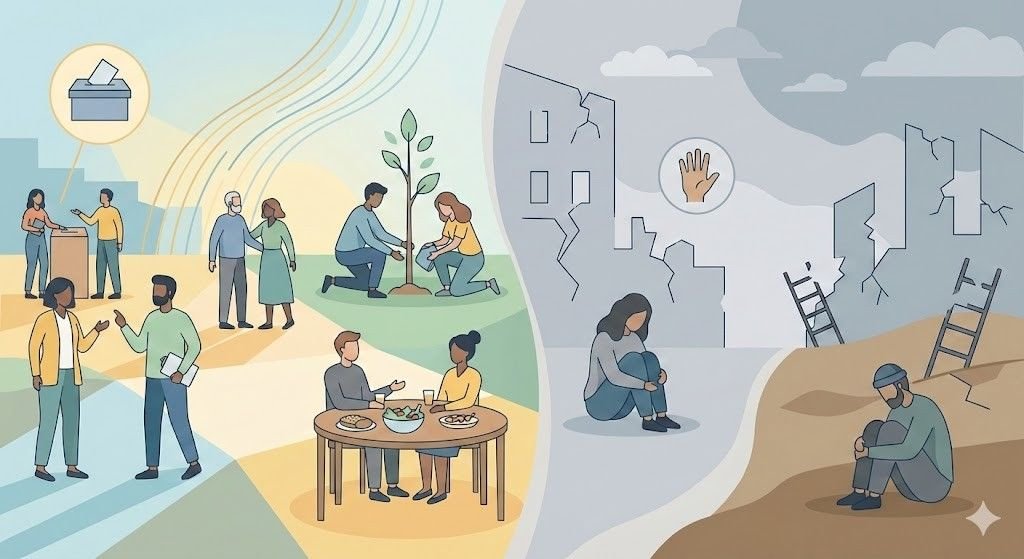
文明跃迁与价值重构 人类文明发展将迈入“社会公民阶段”——即公民普遍觉醒、制度体系相对稳定、个体权利受到广泛关注的现代阶段。 从“臣民” 到“国家公民”, 再到“社会公民”,文明的核心不再是帝国的疆域、权力的集中或技术的炫目,而是价值系统的再造与人们生活质量的普遍跃升。 在社会公民阶段,文明的真正标志,不是城市的高楼林立,不是军队的强大调度,而是是否能够实现自由、民主与幸福的高度统一。 这三者,宛如文明进程中的“三剑客”:自由揭示个体的尊严,民主体现公共的理性,幸福呈现生活的目标。它们共同组成了现代文明的价值结构,也为未来社会的可持续发展提供方向。 一、自由:从臣民到公民的精神觉醒 自由,是社会公民阶段最基础的文明权利。它意味着个体不再是权力的附庸,不再是社会结构中的“工具人”,而是拥有思想、表达、迁徙、信仰等基本权利的独立主体。 历史上的自由思想,常常在压迫的挣扎中生根发芽。 从奴隶社会中个体的无名抗争,到中世纪欧洲对教权压迫的反抗,再到启蒙运动中“自然权利”观念的诞生,自由总是文明最先呼唤的光芒。卢梭、洛克、康德等思想家不约而同地强调:没有自由,便没有道德判断、没有责任主体,更无法建构稳定的社会契约。 在社会公民阶段,自由不再是贵族的特权,而应成为全民的底线。这种自由也必须是制度化的——不是“无政府状态”的混乱自由,而是受到宪法保护、在法治框架下运行的可持续自由。它既要防止国家对个体的侵犯,也要防止资本、技术等新型力量对人的异化。 二、民主:公民社会的制度基石 如果说自由是公民意识的觉醒,那么民主则是将这种意识制度化的路径。它不仅是选举投票,更是权力制衡、公共参与、法治保障、信息透明的综合体现。 民主之所以重要,是因为它让权力来源于人民,并最终服务于人民。 在社会公民阶段,民主不是形式上的合法性,而是过程与结果的合理性。一个真正的民主社会,必须鼓励多元声音的表达,允许政策在公共讨论中被修改、被挑战、被更新。 然而,民主的实践并非易事。在形式化民主泛滥的今天,民粹主义、信息操控、权贵资本与技术平台之间的“数字寡头化”,正在侵蚀民主制度的根基。 投票权固然是公民参与的基础,但如果缺乏成熟的公民意识、批判性思维以及有效的公共讨论平台,这种民主机制便可能沦为空洞的形式。 如今人们常常在社交媒体上发表自己的观点,但互联网也带来了信息过载、观点极化以及虚假信息传播等问题。原先的民主参与渠道在这一变革中经历了深刻的冲击,但也证明了民主制度的巩固和升华迫在眉睫。 近几年来,民主制度所受到的冲击远不止于此,全球范围内的政治动荡和民众对民主制度的信任危机日益加剧。在贫富差距日益扩大的背景下,民主制度似乎未能有效保障社会公平与正义,部分群体的利益被忽视或剥夺,导致他们对民主制度认同感降低,转而投向极权或者民粹主义。 这并不代表民主制度的无能,民主制度本身并非一个完美的体系,它需要不断根据时代的需求进行自我调整与完善。问题的暴露反而为制度的进步提供了契机,促使社会思考如何优化民主机制,以更好地实现公平与正义。 社会公民阶段的民主,远非仅仅依赖于简单的投票机制,而是需要依托更加深刻的公民理性培养、制度韧性建设、以及对社会公民组织的支持。 要更新现有民主制度,国家需要在教育领域进行长远的投入,塑造公民的独立思考与判断能力,提升社会的整体理性水平。 在此基础上,人工智能(AI)和社交媒体作为现代民主的工具,能够通过数据分析优化政策决策,提升政府对民意的响应速度,同时提供更广泛的公民参与渠道。 更重要的是,国家需要持续推动社会组织的发展,构建健全的社会公民参与机制,为公民提供真正有效的参与渠道,使他们能够通过合法、理性的方式表达诉求、推动社会进步,并在公共事务中发挥积极作用。 这些环节共同构成了民主的有机体,才能确保民主不仅仅停留在表面的选举,而是深深扎根于社会的各个层面,体现为每一位公民的参与与对公共事务的理性关注。 三、幸福:文明的最终归宿 自由与民主提供了实现幸福的可能性,但幸福本身,是文明的归宿。它超越了制度层面,体现为人类对生活质量、心理满足、社会关系的总体体验。 过去的社会多以物质为幸福标尺,但即将进入社会公民阶段,幸福已转向更全面的定义: 是否拥有良好的公共医疗与教育?是否生活在安全、包容、公正的环境中?是否有时间和自由去追求意义?是否免于恐惧与匮乏?这些问题,才真正揭示了幸福的深层结构。 在此阶段,社会的幸福不再能够以GDP的增长数字去衡量,而是体现为人们自尊感、成就感、社会责任感与满足感的提升。这需要从福利制度、社会公平、环境保护、心理健康等多维度出发,构建一个以“人的尊严”为中心的现代社会。 幸福不能被强加强迫,也不能仅靠物质刺激或宣传塑造。它源于个体的主观感受与社会的客观条件共同作用,是自由与民主的自然成果。 四、三者的相互嵌套与张力 自由、民主、幸福三者并非孤立存在,而是动态互动、彼此依存的整体: 在现实社会中,这三者往往处于张力之中:某些国家在追求经济效率时牺牲民主;有些政体在宣称民主时限制自由;还有一些发达国家,在高福利下却产生了“幸福的幻觉”与心理问题。 这种张力提醒我们,文明不是静态的理想,而是需要在矛盾中持续调整的动态过程。 社会公民阶段的核心挑战,就是如何构建一套机制,使这三剑客既能彼此守护,又能彼此制约,从而形成高度协调、相互促进的文明结构。 当今世界,仍有许多国家在专制与动荡中挣扎;也有国家虽富而不安,虽强而无爱。这说明,人类并未真正完成向“社会公民阶段”的文明跃迁。 在这样的变局中,每一个国家、每一个社会、每一个人,都应思考: 我们的自由是否真实?我们的民主是否可信?我们的幸福是否可持续? 只有当这三者彼此协调、制度稳固并为所有人所共享,我们才能真正进入文明的新时代——一个尊重个体、协调公共、追求整体福祉的“人本时代”。

The Two Sides of Living: Democracy or Slavery

The Two Sides of Living: Democracy or Slavery

Yicheng · Mar 28, 2025

To be human is not just about biological survival, but about the growth of our spirit and soul. However, the meaning of “living” varies greatly at different stages of history and civilization. Some live in fear, oppression, and deception, simply striving to survive in chaotic times, indifferent to right or wrong. Others live in awakening, […]

read more

Related Content

What is emptiness? A dialogue between Kongzhi and Bodhidharma
Avatar photo
Master Wonder · Feb 12, 2025
In The Legend of Bodhidharma, there is a profound and thought-provoking exchange. One day, a monk named Kongzhi arrived at Shaolin Temple. With great reverence, he bowed before Bodhidharma and inquired about the concept of emptiness in Buddhist teachings. With hands clasped, he asked: “Master, you are Bodhidharma, are you not? I am Kongzhi, and […]
Esoteric Teaching: Human Decline and Consequences
Avatar photo
Master Wonder · Feb 9, 2025
Please be aware that this article was translated from Chinese.Do not behave like an animal; if you must, do not become a sinful beast. I. What is a “human”, an “animal”, or a “sinful beast”? A human is defined not just by their physical form, but by their character, wisdom, morality, responsibility, and spiritual cultivation. […]
The Four Charming Stages of Buddhist Practice
Avatar photo
Master Wonder · Nov 9, 2024
This article explores four stages of Buddhist practice: entry stage, religious stage, soul practice, and spiritual practice. Each stage reflects the practitioner’s journey from personal awakening to the ultimate wisdom of selflessness and formlessness, emphasizing individual uniqueness, disciplined adherence to precepts, compassion for all beings, and profound self-realization. Together, these stages highlight the depth and inclusiveness of Buddhist teachings.
Pure dharma, the vessel to the other shore
Avatar photo
Master Wonder · Feb 5, 2025
Only by following the guidance of pure teachings can we build a strong and solid foundation for our practice, ensuring that our growth will lead us straight to enlightenment. This article was inspired by a conversation I had with a nun in a meditation hall, and I felt compelled to write it down. Spiritual practice […]
View All Content