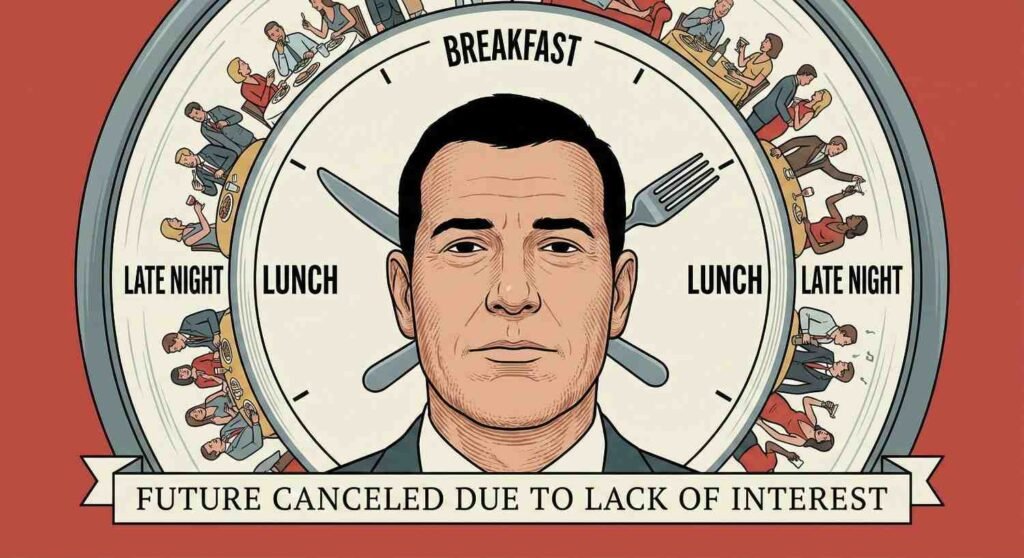
Introduction: A Global Surrender of Time
Amid a profound global demographic reversal, virtually all modern nations are performing the same quiet yet decisive institutional surgery: delaying retirement ages, extending contribution periods, and recalibrating benefit expectations. Technocrats package this transformation as “the necessary response to the aging crisis,” while fiscal departments frame it as “rational adjustments to ensure social security sustainability.”
Yet beneath these sanitized policy terms lies a starker reality: civilization itself is making an “implicit trade-off” between efficiency and humanity. States extract more time to preserve fiscal equilibrium, while individuals find their life plans forcibly deferred to maintain social order.
This isn’t one nation’s anomaly—it’s a global phenomenon. Consider the ticking countdown to America’s Social Security Trust Fund depletion, or Europe’s nationwide strikes over pension reforms. Look at Japan’s normalized “lifelong labor” culture, or China’s twin policy of gradual retirement delays and extended contribution requirements. Every government scrambles to defer systemic collapse, while every worker faces postponed dreams of freedom and fulfillment.
Extending pension contributions, therefore, transcends mere actuarial arithmetic or fiscal mechanics—it fundamentally questions civilization’s moral priorities. It poses a brutal test: How do we balance individual life’s finite nature against public institutions’ seemingly infinite appetite for survival? When systems demand longevity while human lives cannot proportionally extend in length or quality, we encounter modern civilization’s tragic paradox.
“Extended contribution periods” may superficially appear as institutional adaptation—a fiscal tool for managing demographic change. But from citizens’ lived experience, the damage extends far beyond “paying a few extra years.” It triggers wholesale social restructuring and fundamentally redefines individual destiny.
I. A Global Dilemma: Institutional Aging Outpaces Population Aging
The core of the global pension crisis is not that the absolute number of elderly people is too high, but that the institutional systems carrying the pension promises are aging even faster than the population structure.
Most current pension systems emerged during the mid-20th century’s “post-war boom.” Society then resembled a pyramid: high birth rates, low life expectancy, with average longevity barely exceeding 60 years. System architects built upon three seemingly unshakeable foundations: stable full-time employment, long-term single employers, and linear career trajectories.
By the 21st century, all three pillars had crumbled. Life expectancy now approaches 80; gig economies, flexible work, and entrepreneurship define the new normal; aging populations and plummeting birth rates dominate demographic trends. Yet our institutional frameworks remain frozen in industrial-age thinking—systems designed for Ford assembly-line workers now govern “liquid modern” digital-age lives.
Faced with the massive mismatch between “industrial-age institutions” and “post-industrial populations,” the solutions of various governments have almost converged on the same path:
Europe: Countries universally push minimum contributions from 15 to 20-25 years. France’s 2023 forced retirement age increase from 62 to 64 sparked massive social upheaval.
Japan: Chronic pension deficits drive policies toward “unlimited contribution periods”—essentially declaring that “paying until death still might not suffice.”
United States: With Social Security Trust Fund exhaustion projected by 2033, Congress debates pushing full retirement to 70.
China: Facing imminent demographic crisis, policies extending minimum contributions from 15 to 20 years (starting 2030) coordinate with delayed retirement—an unavoidable dual agenda.
Surface policy variations mask fundamental convergence: governments worldwide wield state power to force citizens into sacrificing precious life-time to sustain aging institutional machinery.
II. Extending Contributions = Delaying Freedom
The essence of pension insurance is a “current labor contract mortgaged by future certainty.” It requires workers to surrender a portion of their current income in exchange for the right to exit labor in old age and the guarantee of a dignified life.
When “contribution periods”—this core variable—stretch indefinitely, the contract’s very nature transforms. No longer protection, it becomes temporal bondage, implying:
• Compressed Life Agency: Citizens must labor continuously within institutional constraints for extended periods to “earn” retirement eligibility. • Penalized Alternative Paths: Freelancing, entrepreneurship, career pivots, or family-focused “intermittent living” face severe institutional punishment through contribution gaps. • Existential Alienation: Life’s primary purpose shifts from “realizing personal value” to “fulfilling contribution duties.”
Compression of Life Choices: Citizens are forced to perform continuous labor within the institutional tracks for a longer period to earn the qualification for “legal retirement.” Punishment for Non-Standard Lives: Freelancing, entrepreneurial exploration, mid-career shifts, or choosing an “intermittent life” for family or personal growth will face extremely high institutional penalties (due to interrupted or insufficient contributions). * Alienation of Existence: The primary meaning of “living” shifts from the “right to realize individual value” to the “responsibility to fulfill contribution obligations.”
The result: individuals must systematically postpone life itself—delayed retirement, deferred enjoyment, postponed self-realization. Personal dreams and life blueprints get subordinated to institutional timelines. Social creativity, diversity, and life’s natural flexibility yield to homogenized labor regimens optimized for bureaucratic control rather than human flourishing.
Social creativity, diversity, and the flexibility of life are uniformly replaced by a highly homogenized labor order that is easier to actuate and control.
III. The Breakdown of Intergenerational Balance: Pensions are No Longer Trust, but Debt
Any “pay-as-you-go” pension system runs not on money, but on trust—specifically, robust “intergenerational contracts.”
Young people are willing to pay high pension premiums based on a simple trust: they believe that when they grow old, the next generation will support them in the same way; they believe that the system’s promises are constant.
As contribution periods lengthen, retirement ages retreat, and inflation erodes purchasing power, this foundational trust rapidly disintegrates. New generations (Gen Z onward) confront a devastating calculation:
• They must contribute longer (more years) while expecting less (lower replacement rates) • They must work later (extended careers) while living more stressfully (diminished quality) • Their youth and productivity subsidize previous generations’ “growth dividend gaps,” yet the system offers no equivalent future security
Clear intergenerational fractures emerge: youth embrace “contribution nihilism” and “lying flat” mentalities; elderly panic over benefit erosion; middle-aged populations face triple compression—supporting aging parents, raising children, while building inadequate personal retirement reserves.
Pension insurance transforms from “collective risk-sharing” into “temporal tax extraction”—from sacred social contract to crushing intergenerational debt.
IV. Hidden Inflation: The Bottomless Pit of Institutional Absorption
The most direct fiscal purpose of extending contribution periods is not to make the pension pool “plentiful,” but to slow down the speed at which it becomes “bankrupt.”
In essence, this forces every individual citizen to bear the macro-fiscal risk of the entire system. This risk transfer is implicit, yet extremely heavy:
• Forced Asset Imprisonment: Extended contribution periods essentially delay state payment obligations for decades. Money appears “adequate” on paper while individuals lose asset control for their most productive years.
• Immediate Consumption Drain: Mandatory transfers to social security accounts—especially impacting lower and middle incomes—directly reduce spending power, suppressing domestic demand and economic vitality.
• Promise Depreciation: The ultimate risk: future pension payouts, after decades of inflation and inevitable policy adjustments (reduced replacement rates), may deliver far less purchasing power than original contributions warranted.
This constitutes “institutional inflation laundering”—using extended contribution timelines as leverage to silently transfer currency debasement costs, fiscal structural risks, and demographic transition deficits onto individual workers trapped within the system.
V. Labor Extension: Humans Penned by the System
When retirement becomes far-fetched and the contribution period becomes a sword of Damocles hanging overhead, the meaning of labor undergoes a profound alienation. It is no longer a creative activity to realize value, but degenerates into an “obligation to extend one’s life.”
• Work’s purpose transforms from pursuing better living to “meeting contribution quotas” for mere survival • Labor market aging (elderly forced to delay exit) inevitably squeezes youth employment opportunities and advancement, creating “intergenerational competition spirals” • Employers, burdened by aging workers’ high social costs and reduced innovation capacity, increasingly favor gig arrangements—further undermining system foundations
The final result is the evolution of society into a highly efficient “labor farm”:
Youth must enter the contribution “pen” early; elderly cannot leave until much later; middle-aged remain trapped at the center—simultaneously servicing mortgages, funding current pensions, supporting aging parents, and raising children.
This creates an elegant yet ruthless exploitation architecture: maximizing lifelong labor extraction under the guise of “security”—a sophisticated civilizational trap.
VI. The Collapse of Social Trust
Any social system, no matter how exquisitely designed, ultimately relies on the cornerstone of “trust.”
As pension insurance—a promise spanning half a century—is constantly revised by policies that “extend years, reduce benefits, and delay retirement,” the public gradually forms a highly corrosive consensus:
“I’m not paying ‘insurance’—I’m paying a mandatory tax with murky purposes and uncertain returns.”
When individual grievances crystallize into collective consensus, nationwide trust systems approach collapse. Youth choose “contribution strikes” or minimum payments as silent resistance; panicked elderly trigger benefit “runs”; states introduce policy patches to “maintain stability,” creating vicious cycles: policy betrayal → public resistance → fiscal deterioration → deeper policy betrayal.
The cost of collapsing trust is far higher than the pension deficit. It will severely damage social cohesion, institutional legitimacy, and the fundamental credibility of the state.
VII. The Cost of Civilization: A Society Losing Freedom and Trust
When a society relies long-term on “time extraction” measures like “extending contribution periods” to solve fiscal pressure, what it ultimately loses is not just short-term economic vitality, but the very foundation upon which civilization survives.
• Freedom’s Price: Individual life narratives become subordinated to institutional timetables. Personal sovereignty over life planning transfers to fiscal actuarial spreadsheets.
• Happiness Deferred: People cannot freely or dignifiedly plan their golden years—only anxiously await “qualification dates.” Fulfillment becomes perpetually just beyond reach.
• Trust Deficit: Youth lose faith in systems and futures. Intergenerational contracts face unilateral cancellation, shaking social consensus foundations.
• Innovation Drain: When labor becomes extended “servitude,” even social elites scramble to “complete their years.” Society loses innovative drive and spiritual renewal capacity.
The true crisis of a civilization is never a fiscal deficit, but a trust deficit.
When states trade individual happiness delays for short-term system stability, citizens respond with silence and non-violent non-cooperation. This silence signals not compliance, but structural despair.
VIII. Toward the Future: The Regeneration of a Civilized Pension System
Humanity must leap out of the institutional framework of the “industrial age” and redesign a pension system that aligns with the civilizational logic of the 21st century. Extending contribution periods is merely a painkiller to delay the crisis, not a prescription to solve the problem.
The true direction of civilization is to allow “humans” to regain sovereignty over “time.”
From State Monopoly to Social Ecosystem:
Break the first pillar’s (state) monopolistic burden. Aggressively develop occupational pensions (second pillar) and personal retirement accounts (third pillar), integrating community mutual aid and AI-assisted care. Transform pension responsibility from “single fiscal obligation” into “state-enterprise-individual-society” shared ecosystems.
From Rigid Uniformity to Flexible Choice:
Establish flexible retirement mechanisms allowing citizens to choose labor market exit timing and methods (including “semi-retirement”) based on health, finances, and family needs. Systems should guarantee basic security floors without mandating uniform labor rhythms.
From Contribution Years to Dignity Years:
Civilizational systems should be measured not by citizens’ contribution duration, but by post-labor years of dignity, quality, and security they enable.
From Fiscal Balance to Life Balance:
Reaffirm fundamental truth: economic systems serve human flourishing—not vice versa. People shouldn’t sacrifice precious life-time sustaining rigid institutional machinery.
Systems can be calculated, but civilization should not come at the cost of sacrificing humanity and compressing freedom.
Conclusion: Reclaiming Autonomy Over Time
Extended contribution periods—seemingly embodying “pay more, get more” fairness—have evolved, amid aging and economic deceleration, into “delayed fulfillment, compressed freedom, and risk transfer” models.
For citizens trapped within, costs transcend economic burden—they represent systematic existential downgrades. Individual time gets “institutionally hijacked,” life plans face “passive delays,” systemic risks transfer to individuals, choice “freedom” suffers dramatic dilution, and future “trust” approaches collapse.
Authentic pension reform must pivot from fiscal perspectives (“filling the pool”) toward human-centric approaches (“making citizen time valuable”). Without returning to “guaranteeing lifelong freedom and dignity” as the foundational design principle, additional contribution years merely extend institutional assembly-line existence without improving life quality.
Civilizational progress lies not in extending citizens’ system-serving years, but in expanding their freedom, dignity, and happiness. System greatness isn’t measured by fund longevity, but by how fully people can master their finite, precious life-time.