To be human is not just about biological survival, but about the growth of our spirit and soul. However, the meaning of “living” varies greatly at different stages of history and civilization.
Some live in fear, oppression, and deception, simply striving to survive in chaotic times, indifferent to right or wrong. Others live in awakening, dignity, and participation, willing to fight for freedom and rights.
In the structure of today’s society, “living in survival” and “living in democracy” are not abstract philosophical concepts. They are two very real states that exist within national systems, historical progress, and the depths of human nature.
I. Surviving in Fear: The Breeding Ground of Slavery Systems
“Surviving in fear” is not merely a sign of individual weakness, but a widespread result of long-standing authoritarian systems, class hierarchies, and ideological control throughout history. In such a state, human existence is reduced to the mere continuation of the body, stripped of freedom, dignity, and agency.
In many civilizations, feudal and imperial systems have constructed this “survival” breeding ground. For example, China’s centralized system since the Qin and Han dynasties, the military and political rule during the late Roman Empire, and the totalitarian regimes of the 20th century that tightly controlled thought and speech, all created large “silent majorities.”
These people had no rights, no voice, and no way to express themselves—they obeyed not out of belief, but out of fear.
Living in fear also takes a toll on the spirit. When people grow up under authoritarian rule, they start to adopt mindsets like “keep your head down to stay safe,” “the smart ones go with the flow,” or “it’s better to avoid trouble.” This kind of mental numbness is actually a deeper form of oppression than physical control—it gradually strips people of their ability to think for themselves and take action. In the end, they stop asking “why am I living?” and just focus on “how do I get by?”
II. Living in Democracy: Awakening Civic Consciousness and Human Rights
In contrast, “living in democracy” is the product of awakened civic awareness. It is a way of life grounded in the protection of rights, participation in systems, and freedom of speech. In this state, “living” means more than just physical survival—it means having the power to make choices, express opinions, and participate in decisions that affect you.
1. Systemic Protection: Freedom is Not Just an Abstract Ideal
The development of Western democratic systems, particularly marked by the Enlightenment of the 18th century and the American and French revolutions, signaled the shift of “living in democracy” from theory to practice. From Rousseau’s The Social Contract to Lincoln’s “government of the people, by the people, for the people,” democracy transformed individuals from subjects into citizens, giving them the right to participate in governing their nation. Even in imperfect systems, citizens in democratic countries still have legal means to challenge the status quo and the right to voice their dissatisfaction publicly.
2. Mental Awakening: The Foundation of Civil Society
Democracy is more than just a system—it’s a deep cultural and mindset shift. In a true democratic society, people actively seek truth, care about justice, and respect others’ rights. They’re not afraid to challenge the government and are ready to take on public responsibilities. They embrace diverse viewpoints and are open to finding common ground through conversation.
III. Slavery vs. Democracy: The Intersection of History and Reality
History isn’t black and white—survival and democracy often coexist on different levels within the same society. In modern nations, even when democracy is formally in place, there can still be hidden censorship, economic monopolies, and class oppression, leaving some people stuck in a state of mere survival.
At the same time, in more closed-off regimes, there are often movements where the people at the bottom fight for democracy, like the Arab Spring or Hong Kong’s “Umbrella Movement.”
Even in countries where democracy is relatively well-established, economic downturns often bring the risk of authoritarian and fascist ideologies resurfacing. In Germany, for instance, the economic pressure caused by the Russia-Ukraine conflict led to soaring energy prices and a significant drop in real wages, marking the largest decline since World War II. This has created fertile ground for far-right parties like the Alternative for Germany (AfD), whose support surged in 2022 and 2023.
Undoubtedly, current democratic systems still have their flaws. For instance, tech monopolies and capital exploitation are creating a “pseudo-democracy”—people appear to have the freedom to choose, but are actually controlled by algorithms, consumerism, and media manipulation.
Democracy’s “form” is becoming more widespread, but the “substance” is being gradually diluted. This structural alienation is causing some democratic societies to slip back into a state of mere survival.
IV. Why Surviving is Easier Than Living in a Democracy
Surviving in tough situations is more common not just because of oppressive systems, but also because of human nature’s tendency to take the easy way out. When faced with a complex world full of risks and responsibilities, many people choose to obey, stay silent, or avoid confrontation. This is really a fear of “freedom.” Heidegger called it “sinking into nothingness” — when people face the absurdity of life, they just give up on their individuality and blend into the crowd.
On the other hand, living in a democracy requires personal responsibility, critical thinking, judgment, moral courage, continuous learning, and political involvement. It’s a free way of living, but also a lot harder. As Tocqueville said in Democracy in America, freedom requires much more from citizens than authoritarian systems do, because it asks each person to be their own “king,” to take control of their own life and work to build a better society.
Conclusion: The Crossroads of Civilization
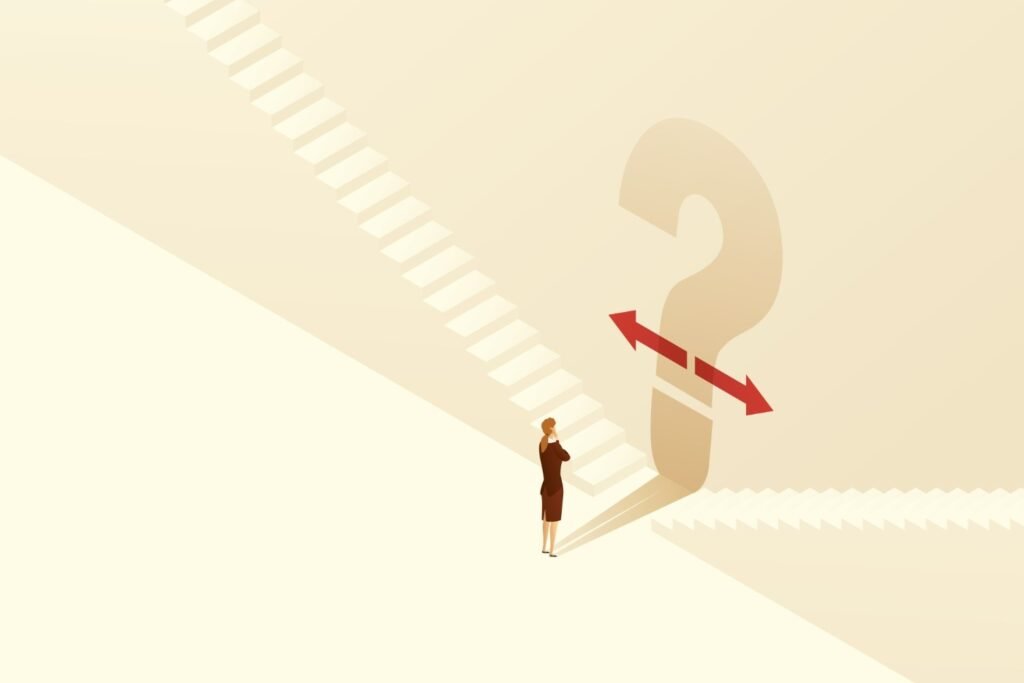
When we talk about living, we’are really choosing the direction of our civilization. Will we continue to survive in a world of control, slavery, and silence? Or will we rise towards a life of rights, dignity, and public responsibility? This isn’t just about the systems of any one country—it’s the choice facing humanity as a whole today.
“Surviving” is a result of history’s struggles and a sign that we stopped pushing for real progress. Living just to get by will lead to stagnation and even a step backward for civilization. But “democracy” is the forward leap, a response to our true human nature.
Living in a democracy may be tough, but it is the only path that allows civilization to grow and thrive.
Let’s stop settling for just existing. Instead, let’s live with dignity and purpose. This is the way forward for civilization, and the call of our true selves.