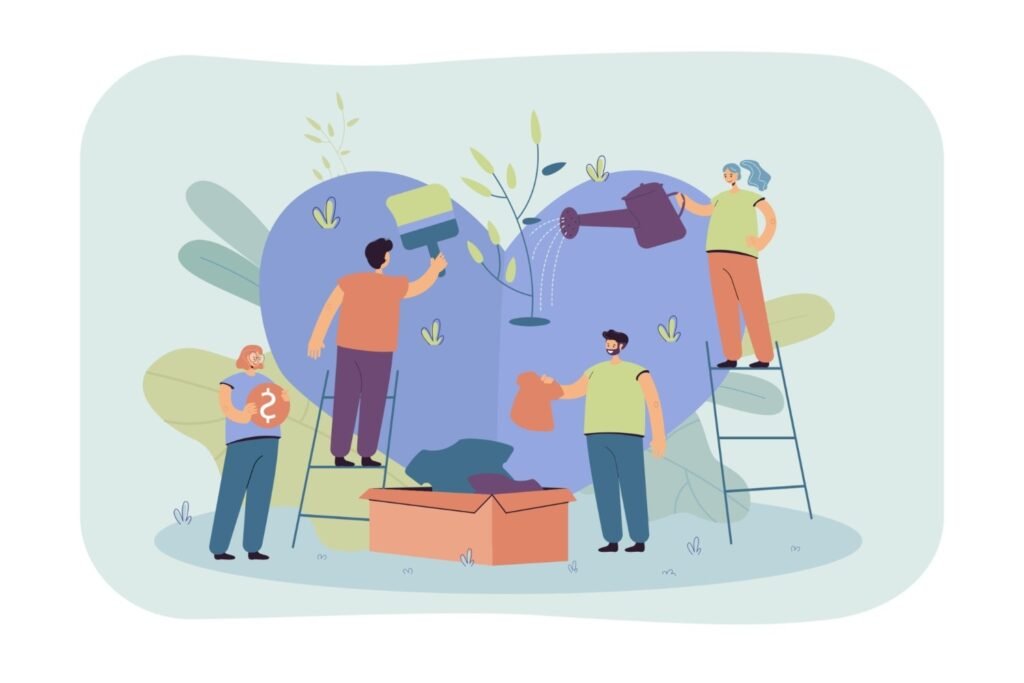
This article is about the differences between Social Welfare Creation, Social Welfare Production, and Social Welfare Assurance, and their overall significance to human development.
Social welfare forms a fundamental pillar of modern societal development, spanning the entire process from conceptualization to implementation and maintenance. The creation, production, and assurance of social welfare each fulfill unique roles and responsibilities, yet their synergy is essential for sustained societal advancement.
Yicheng Commonweal examines the distinctions among these three aspects, offering deeper insights into their roles within social structures and developmental processes. This exploration enables a more comprehensive understanding of the profound impact social welfare has on human progress.
I. The Fundamental Logic and Value Framework of Social Welfare
1. The Essence of Social Welfare
Social welfare represents an institutionalized distribution of societal resources, aimed at enhancing overall well-being through equitable resource allocation, risk management, and public services.
- Economic Aspect: Addressing disparities in resource distribution and market failures, filling the gaps left by the profit-driven nature of capital.
- Social Aspect: Strengthening social cohesion and reducing divisions caused by poverty, illness, and inequalities in education.
- Cultural Aspect: Fostering shared community values and enhancing citizens’ sense of belonging to society.
2. The Need for Welfare in Modern Society
The need for welfare is a reflection of social conflicts and acts as a driving force for societal progress. Throughout history, conflicts have consistently been a catalyst for development. From the labor-capital struggles in the early industrial era to the wealth distribution challenges in the era of globalization, the development of social welfare systems has been shaped by the need to address and balance these challenges.
II. An Analysis of Social Welfare Creation, Production, and Assurance
1. Social Welfare Creation: The Integration of Values and Innovation
Welfare creation is the process of designing solutions for societal issues, with its core focus on proposing new systems, methods, and ideas that align with the needs of the times.
- Value-Based Social Design: For example, the Universal Declaration of Human Rights established the principle that “everyone has the right to enjoy basic living standards,” a value-driven approach that has propelled the development of modern welfare states.
- Integration of Technology and Sociology: The application of technologies like big data and artificial intelligence enables precise identification of social needs and the design of personalized welfare solutions.
- Social Dialogue and Multilateral Participation: Welfare creation is not only the responsibility of governments and elites but also requires the active participation of civil organizations, social groups, scholars, and the public to ensure fairness and inclusivity.
Challenges and Issues:
- Delayed Response: Welfare creation often falls behind the emergence of societal problems, leaving problem-solving as an ongoing effort.
- Interference from Interest Groups: Powerful interest groups may compromise the fairness and equity of welfare design.

2. Social Welfare Production: The Core Process of Resource Allocation and System Implementation
Social welfare production is the process of transforming welfare creation concepts into practical actions, encompassing resource integration, service delivery, and supervision.
- Efficient and Equitable Resource Allocation: By optimally distributing financial budgets, human resources, and other assets, welfare services can maximize their reach and benefit the public effectively.
- Diverse Organizational Models: Beyond traditional government-led approaches, non-profit organizations and social enterprises are increasingly involved in welfare production, fostering a collaborative, multi-stakeholder framework.
- Balancing Efficiency and Quality: For instance, healthcare systems must balance broad accessibility with high-quality services, avoiding situations where care is available but unaffordable.
Challenges and Issues:
- Corruption and Waste: Intentional misconduct and inefficiency during implementation can severely hinder the impact of welfare systems.
- Uneven Supply and Demand: Disparities in service provision, particularly in developing countries or regions with significant resource inequalities, create barriers to fair access.
3. Social Welfare Assurance: Safeguarding Stability and Sustainability
Welfare assurance functions as an institutionalized framework designed to ensure the long-term stability and functionality of the welfare system through laws and policies.
- Legal Protections: For example, Germany’s Social Insurance Code ensures equal rights for all citizens through legislative measures.
- Risk Response Mechanisms: Preparedness for crises such as economic downturns or natural disasters helps prevent the welfare system from collapsing under external shocks.
- Intergenerational Equity: The system must balance meeting current needs with avoiding excessive financial burdens on future generations
Challenges and Issues:
- Pressure from Aging Populations: The strain on welfare funds caused by increasing life expectancies and aging demographics.
- Globalization-Induced Competition: Global competition may lead to welfare reductions as countries vie for economic advantage.
III. The Role of Social Welfare in the Overall Social Structure
1. Addressing Economic Contradictions
The creation, production, and assurance of welfare collectively fill gaps left by the market economy. Through social security funds, public services, and policy interventions, welfare systems mitigate the destructive effects of income inequality on the economy while providing a foundation for societal stability.
2. Building Social Order and Cohesion
By safeguarding basic rights, welfare systems uphold social order, especially in contexts of widening income disparities and reduced social mobility. Welfare assurance serves as a critical tool to prevent societal fragmentation.
- Case Study: Nordic Welfare States
High levels of welfare protection in Nordic countries not only enhance citizens’ well-being but also strengthen social cohesion, making them models of stable and efficient societies.
3. Advancing Human Civilization
The evolution of social welfare systems—from charitable relief to modern welfare states (despite some underlying issues in the system) —reflects humanity’s ongoing pursuit of core values like equity, freedom, and dignity.
IV. Future Development: Challenges and Opportunities in Globalization and the Technological Revolution
1. The Impact of Globalization
Globalization introduces challenges to the sustainability of welfare systems, such as international competition, immigration pressures, and the growing need for global cooperation. For instance, refugee influxes can strain host countries’ welfare systems, while global welfare collaboration remains underdeveloped. Yicheng Commonweal is dedicated to researching a “Social Citizenship Welfare System” and contributing to the well-being of all citizens through its initiatives.
2. The Double-Edged Sword of Technological Revolution
- Opportunities: Artificial intelligence and automation can enhance the efficiency of welfare production, such as using blockchain technology for targeted poverty alleviation.
- Challenges: Rapid technological advancements may exacerbate new forms of inequality, further increasing the burden on welfare systems.
3. Ecological Civilization and Sustainable Development
The future of social welfare must integrate the principles of ecological balance, creating a green welfare system that meets human needs while respecting the limitations of natural resources.

V. Yicheng Commonweal: Pioneering the Exploration of Universal Well-Being
The creation, production, and assurance of social welfare are not only vital tools for economic and social progress but also a profound reflection of humanity’s ongoing pursuit of equity, happiness, and dignity. These three elements work in tandem, building a safety net for society while opening the door to limitless possibilities for the future.
Amid globalization, technological revolutions, and ecological crises, it is imperative to rethink the meaning and scope of welfare systems to ensure they remain a driving force for the collective development of humanity. Yicheng Commonweal is committed to this exploration, striving to innovate and adapt welfare systems to meet the challenges of our times and secure a brighter future for all.