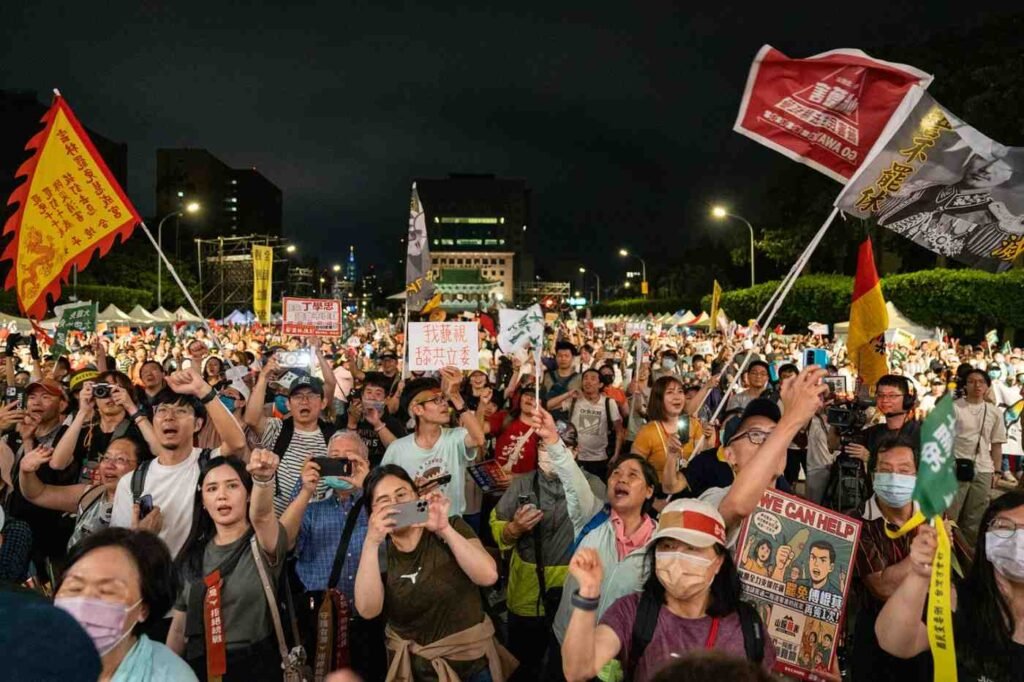
The institutional evolution and historical trajectory of civil politics
Produced by Yicheng Commonweal
To those who truly love their country
I. Opening: Who does true governance belong to?
In today’s world, nearly every nation inscribes grand slogans such as “putting people first” or “rule of law” into its political declarations. These phrases are treated as if they automatically elevate a government to the moral high ground of civilization. Yet the reality is often the opposite. Such terms have become rhetorical veils that conceal authoritarianism or preserve privileged structures. Beneath them lies a political logic that serves not the people as a whole, but a small circle of power holders—state elites, wealthy elites, and cultural aristocrats.
Now, we must confront a question that has long been avoided: Whose interests should a nation truly be governed for?
The answer may not be complicated: the true masters of a nation must be every “complete citizen” who shares the rights and responsibilities of political, economic, social, and cultural governance.
This article will examine both theory and real-world cases to systematically challenge the absurdity of so-called “people-centered” and “rule-of-law” approaches, and to advance a governance model centered on complete citizens—an institutional framework that reflects the direction of future civilizational progress.
II. Pseudo “people-centered” and pseudo “rule-of-law”: the reality behind the institutional façade
1. “Putting people first”—but which people are we really talking about?
We cannot judge a nation’s civility merely by the slogan “people-centered”. In practice, the “people” it refers to are often not citizens in the general sense, but a select few within specific groups.
- In the United States, “freedom” and “individual rights” are constantly emphasized, yet the real foundation of governance is the control of national destiny by wealthy elites. The state apparatus is deeply intertwined with capital interests, resulting in extreme wealth inequality and long-term monopolization of public resources. What once were citizens’ rights have now largely become consumer perks and the illusion of meaningful voting, completely detached from genuine self-governance.
- In countries such as Russia and Iran, the stability of the regime relies on suppressing personal freedoms under the banner of “national security.” The slogan “people-centered” serves merely as a tool for maintaining control; in reality, governance is regime-centered.
- In Middle Eastern monarchies and Southeast Asian family-based authoritarian systems, there is little talk of “people-centered” governance at all. The state operates directly on the basis of ruling power and oligarchic economic structures, with the “people” reduced to subjects of the throne or instruments for resource extraction.
The common thread in these systems is that the “people” in the logic of governance are never recognized as autonomous individuals with full political, economic, and social rights. Instead, they exist as objects of rule, merely softened with polite or positive language.
Slogans may abound, but the status of the people remains unclear. In reality, so-called “people-centered” governance is often just a rhetorical device through which those in power claim legitimacy from society—it is not a system genuinely based on citizens.

2. “Rule of law”—but what is actually being governed?
At first glance, “rule of law” appears to be the rational achievement of modern state governance. In reality, however, it is more often a mechanism for maintaining existing systems than a genuine model of governance. A nation may have a complete legal system and standardized procedures, but this does not necessarily mean it is well-governed. The reasons are as follows:
- Law can itself be a tool of oppression.
Nazi Germany had a comprehensive legal code, and South Africa under apartheid also acted “according to the law.” Yet in both cases, the law was not designed for all citizens—it served specific races or regimes. - Law is not neutral. it is a reflection of the underlying values behind the system.
In capitalist nations, the law upholds private property as its highest value, while in authoritarian states, its foremost aim is to secure political order. In both cases, the rights of citizens are routinely sacrificed for the sake of “legitimacy.” - Rule of law cannot correct structural injustice.
Laws are merely rules, but it is the institutions behind them that determine whether fairness is possible. If the design of these rules excludes the possibility of citizen participation, shared governance, and common good, then even the most complete legal system becomes nothing more than a pretext for procedural injustice.
In other words, the rule of law can maintain order, but it cannot create justice. When citizens are excluded from participating as the true subjects of law, the system becomes a softened form of power — a bloodless authoritarianism.
Although the rule of law is a basic element of modern governance, it remains a procedural mechanism rather than a governing paradigm. It preserves order but does not shape vision.
- Nazi Germany had a complete legal system, yet it used law to kill with legitimacy.
- During apartheid, South Africa enforced racial discrimination through law.
- In many countries today, “national security laws” are used to restrict free expression and punish dissent — all justified as lawful governance.
These historical facts have revealed that:
- When legislation is controlled by non-civic mechanisms, the very perfection of law turns into a satire on justice.
- True law arises only from the collective will of citizens who share the right to shape their own governance.
In short, the rule of law is not an end in itself but a means. Without the core value of complete citizenship, it risks turning into a form of legalized oppression.
III. The real solution: a governance model centered on complete citizens
What does it mean to build a nation around its citizens? It is not a slogan but a systemic logic. it is a comprehensive reconstruction of social governance. There are five primary features:
- Recognition and protection of the “complete citizen”:
A complete citizen possesses political decision-making power (such as legislative participation and the right to referendum), economic sovereignty (including labor dividends and public capital shares), social security (through welfare systems), and cultural freedom (a space for thought and expression free from oppression). - Broad civic participation in governance:
The operation of state power should be built on citizen assemblies, social consultation mechanisms, and local self-governance — not on administrative bureaucracies or oligarchic elites. - Public resources open to all citizens:
Education, healthcare, land, natinoal data, and finance should no longer be monopolized by the state or controlled by capital. They must be governed and shared through citizen trust systems. - Institutional transparency and civic participation:
All processes of institutional design should be open and transparent. Citizens should have the right to propose, veto, and amend policies through democratic mechanisms. - Civilizational ethics and values above capital or security logic:
The ultimate goal of governance should shift toward collective well-being and the sustainable growth of civilization, rather than mere economic expansion or authoritarian stability.
1. What is a complete citizen?
A complete citizen does not simply mean someone who holds official identification. It refers to an individual who is endowed with full rights to participate in, decide upon, and share the outcomes of state governance, including at least:
| aspects | Contents of Citizenship Rights |
| Political rights | Right to vote and recall, right to propose public initiatives, participatory legislative rights, right to approve or veto via referendum |
| Economic rights | Right to participate in national wealth distribution, share in public data dividends, receive dividends from state-owned capital, negotiate labor-related dividends |
| Social rights | Access to basic welfare, fair access to education and healthcare, right to participate in social consultation mechanisms |
| Cultural rights | Freedom of speech, freedom of intellectual and spiritual space, right to participate in the design of educational curricula |
A complete citizen is not an abstract symbol, but a tangible force within the governance of the state.
Only when these rights are institutionalized, enforceable, and transparent do citizens truly become the masters of their nation.
2. Five institutional principles of citizen-centered governance
- Shared governance structure: Major state decisions, resource allocation, and budget use should be grounded in citizen assemblies, public forums, and local self-governance systems.
- Shared benefits system: Social wealth, including public capital, natural resources, and data assets, should be managed through a “citizen dividend fund,” distributing dividends to all citizens.
- Consensus mechanisms: Deliberative democracy should serve as the institutional core, avoiding one-size-fits-all mandates while accommodating diversity, differences, and balancing interests.
- Shared responsibilities: Citizens not only enjoy rights but also bear institutional responsibilities, such as supervising state power, participating in budget decisions, and protecting the environment.
- Shared goals: The objectives of governance should no longer be mere economic growth or regime stability, but rather civilizational well-being, social engagement, and institutional trust.

VI. The evolution of governance: from subjects to citizens, from control to co-governance
Modes of governance do not emerge overnight. They are the outcome of continuous historical evolution.
| Stage | Mode of governance | Relation of subjects | Characteristics |
| Feudal | Monarch supremacy | Subjects | Law is the will of the monarch. |
| Theocracy – Divine monarchy | Church or divine authority | Faithful | Governance based on religious principles |
| Constitutional monarchy | Power shared with nobility and bourgeoisie | Taxpayers | Rights are hierarchical |
| Democratic republic | Citizen co-governance | Entire citizenry | Establishment of representative institutions |
| Data governance (modern turning point) | Information and platform controlled by tech oligarchs | “Data subjects” | Virtual enslavement |
| Citizen co-governance (future trend) | Collaborative decision-making by all | Complete citizens | Technological empowerment and equitable governance |
Conclusion: Governance built around complete citizens is not an abstract ideal. It provides a concrete way to counter information tyranny, centralized power, and capital domination.
V. Global governance models: who is advancing toward citizen-led co-governance?
| Country/Region | Characteristics of governance model | Citizen status | Advantages | Risks |
| Switzerland | Multi-level direct democracy | high | Strong local autonomy, high institutional trust, low corruption | Slow decision-making, slow reform |
| Norway / Finland | Social democracy | high | Fair welfare system, multiple platforms for participation | High taxes, aging population burden, challenges in integrating immigrants |
| The United States | Capitalist representative democracy / capital-driven democracy | Medium-Low | Diverse culture, robust legal system, freedom of speech, independent judiciary | Wealth inequality, oligarchic control and monopolies, social polarization |
| Singapore | Elite governance + rule of law, technocratic bureaucracy | Medium | High administrative efficiency, low corruption, high performance, low crime | Weak democratic participation, limited citizen involvement, high control |
| Iran / Russia | Authoritarian state, religion- or security-based governance | Very low | Apparent social stability, strong cultural mobilization | Suppression of freedoms, inability to reform, institutional rigidity |
The conclusion is simple: efficient governance does not equal a civilized society. Citizen status is the key factor in judging the quality of a governance model. The first benchmark of good governance is citizens’ institutional position, not economic output or political stability.
VI. The historical and civilizational necessity of citizen-centered governance
- History moves from subjects to citizens, from domination to co-governance.
Whether it was the French Revolution, the American War of Independence, or the democratic transitions in post-colonial states, the underlying essence has always been the pursuit of citizen agency. - With the rapid advancement of technology, governance need to return to human-centered collaboration.
With AI, blockchain, and data governance, old-style centralized control is too expensive and hard to trust. A country can only be strong, open, efficient, and fair if citizens are actively involved in decision-making networks.
The society of the future will be one of co-governance, not mere regulation.
Global challenges—like climate change, pandemics, and resource scarcity—force countries to adopt universal participation mechanisms. Citizens should become the designers, implementers, and evaluators of institutions. Otherwise, the system loses its legitimacy.
VII. Systemic risks and future governance challenges
A citizen-centered governance model is not a “perfect state” and must confront several real-world challenges:
- Populist polarization: Unrestricted citizen participation may lead to emotional politics and rising xenophobia.
- Data monopoly: If AI, large models, and algorithmic platforms are not publicly owned, a new digital ruling class could emerge.
- Governance fatigue: Without incentives and institutional feedback, citizen participation can fall into superficial democracy.
- Fragmented governance: Diverse participation without top-level consensus may result in uncoordinated policies and localism.
The solution is to create a governance system that brings together deliberation, public data, civic education, and citizen responsibilities, enabling a virtuous cycle of co-governance.

Conclusion: The ultimate purpose of a state is not to rule, but to ensure the happiness of its people living together. The height of civilization is determined by the depth of its citizens’ participation.
Whether a country is truly “civilized” does not depend on how much wealth it produces or how strong its military is. It depends on whether every citizen is recognized as a genuine master of the state, whether institutional arrangements guarantee their rights to participate in governance, pursue happiness, and contribute to civilization—and whether these rights are actually exercised.
In other words, a civilized state acknowledges, institutionalizes, and empowers each citizen’s rights to governance, well-being, and participation in democracy.
The so-called citizen-centered governance model is not just a systemic innovation. It is a great return to the true purpose of the state—a community built by the people, for the people, and run together by the people.
In this era of institutional disputes, uncontrolled technology, and crossroads of civilization, we must take this decisive step: return power to the people, restore authority to the citizenry, and build a state that truly belongs to every complete citizen.
We must move beyond the hypocrisy of “people-centered” rhetoric and the partial logic of “rule of law,” and return to the simplest, yet the most powerful principle of governance: each person, as a complete citizen, co-governs, co-owns, and co-creates the civilization of their state.