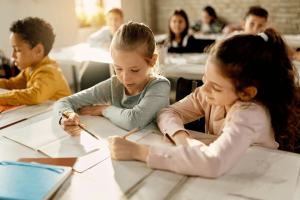
In recent years, there has been a growing amount of research and practices regarding the prevention and solution of school bullying, from the application of restorative justice to teaching the children emotional management and conflict resolution. While these efforts all contribute to reducing the phenomenon of school bully, they cannot compare with a systematic response mechanism that exerts the power of democratic union at school and social level and fundamentally prevents and deals with the problem. In this article, the purpose and details of this mechanism will be elaborated and well explained.
Understanding the Cause of Bullying
When it comes to the reasons of bully, practically everything is on the list. From collective characteristics including race, gender, religions to individual traits such as appearance, body size, clothes, accents and life style, all these features can be the “problem” with the victims. Fundamentally, the behaviors of bullying stems from a lack of tolerance. And when individual bullying escalates into group bullying, it becomes more about political siding.
The central figures in a bullying group usually enjoy the social power in the group, which may come from their appearance, status, popularity, and other desirable traits. While other students in the group typically feel the need to please the central figures by proving themselves through bullying. As for the onlookers, they refrain from helping the victim to avoid becoming targets themselves. In a word, bullying is essentially a loss of balance in political power. From this perspective, a highly effective way of saving the victims from the vicious circle of bullying is to introduce an external democratic power so as to balance the power struggle between victims and bullies.

Combating Bullying through a democratic approach
The key is to introduce and exert the power of democracy in a rational and reasonable way. For the past decades, we have witnessed the strength of democratic union in various campaigns against injustice and inequality. It is fair to say that broad political alliances and collective democratic efforts are crucial in reducing unfair phenomena and countering violence. And the same applies to school bullying. With an extensive attention to the problem, people will be more aware of the issue and more likely to take actions to help the victims.
Democratic struggle focuses on raising awareness and cutting down on discrimination and violence, while personal revenge can lead to extreme behaviors and causing further psychological problems for the victims. We want to avoid these undesirable outcomes and ensure students grow up in a supportive environment. Therefore, schools should provide a safe, inclusive, positive and constructive way for students to strike back against bullying.
Building an Intervention System at school-community-society level
Schools and communities need to work together to establish an extensive democratic intervention mechanism, in order to tackle bullying effectively and turn bullying into a force to promote the progress of social democracy. While many current solutions of school bullying focus on prevention and mediation, they overlook the power of democratic union among students themselves, which is the key to address the problem in a sustainable way.
First of all, schools should introduce a democratic pledge of anti-bullying for student organizations or school clubs, which should include clear definition of bullying and encourage student groups to stand against it. Student groups that sign the pledge promise to oppose any form of violence, discrimination and bullying, both within and outside their groups. If bullying occurs and the victim seeks help from the group, group members have the responsibility to reach out and support the victims. As a reward, the student groups that sign the pledge will gain opportunities or recommendation for both individual growth and group development. By involving the efforts of student organizations, schools will be able to create an extensive support network for the victims of bullying.
Once signing the pledge, group members must discuss and devise internal anti-bullying rules with the help of the school office — as a part of commitment. Different student groups have their own internal policies against school bullying. To avoid misuse of power and ensure justice, schools should form a committee of teachers, parents, student representatives and community members to review anti-bullying policies and supervise the operation of the system. There should be an anonymous reporting channels for students to report issues without fears.
When there are conflicts among group members, the leaders should take positive actions to settle the conflicts and offer help for members who are bullied. Victims outside these groups can also seek help from members, who have a responsibility to provide assistance. If the leaders or members are found to favor or protect the bully, or turn a blind eye to the bullying behaviors, they will have their rewards cancelled and be reported by the school.
Such an intervention system fully encourages mutual support among students and provides structured help for the victims of school bullying. On the other hand, the system integrates democratic processes into the anti-bullying framework. It also empowers students to engage in civic activities and understand the importance of democracy and collective action. This engagement can help students develop critical life skills, such as conflict resolution, empathy, and leadership, which are valuable beyond the school environment.

Providing Guidance and Care for Bullies
One potential concern is that the anti-bullying policies may pose a threat to the reputation of the bullies and lead to social exclusion for them. It is thus essential for policy makers to bear in mind that the anti-bullying mechanism targets at resolving bullying behaviors instead of punishing individuals. When educating the students on the impact of bullying, schools should encourage them to treat the bullies in a rational way, which is crucial for the bullies to reflect on and adjust their behaviors. When the issue is settled, both the bully and the victim should have the opportunity to access psychological support and guidance. The bullies should get counseling which helps them develop positive social skills and reintegrate into the school and community.
By establishing a robust intervention system, the phenomenon of school bullying will be greatly relieved. The system is designed as a sustainable method to strike against bullying. Its emphasis on democratic values and civic engagement will also cultivate a more inclusive, supportive and responsible school culture. If the mechanism is implemented in regions, states and even the whole nation, an extensive anti-bullying line will be built up, extending to communities and the whole society.