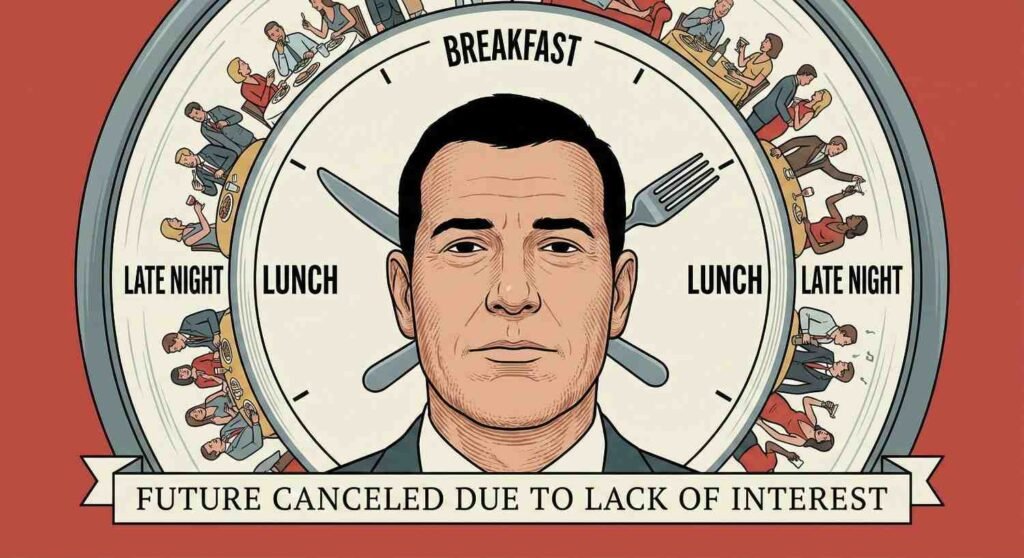
Why do nations exist?
Not for slogans, not for borders, and not for GDP numbers.
The true purpose of a nation is to protect basic human rights, uphold the dignity of its people, and improve their quality of life.
If a country appears powerful but its people are suffering—if there is national pride but public anxiety—then that country is just an empty shell. It may look strong on the outside, but inside it is full of deep problems.
That is why it is essential to understand the difference between “serving the state” and “serving the people.” A modern government must see serving its people as the only true source of legitimacy. Only then can a nation remain stable, fair, and truly prosperous.
I. The conflict between serving the state and serving the people
“Serving the state” usually means focusing on national goals like economic growth, military power, global influence, and national security.
“Serving the people” means protecting individual rights—fair income, stable jobs, affordable housing and healthcare, free speech, fair justice, public welfare, dignity, and political participation.
These two goals should go hand in hand. But in practice, especially in how governments use power, there are often structural conflicts:
- Resource conflict: Governments spend more on big projects or military and choose to cut public welfare spending.
- Unequal participation in decision making: National strategies are decided by a small elite; ordinary citizens have little say.
- Different values: Power wants control and unity, while people need freedom and choices.
- Unfair benefits: “National interest” often serves the rich and powerful, while citizens are left behind.
These deep conflicts are the biggest problem with “state-centered” policies—and the real threat to the people.

II. What are the risks of “state-centered” policies?
Some governments, in order to protect national image or appear strong in foreign affairs, choose to sacrifice the rights and wellbeing of their citizens. Over time, this leads to seven major risks, with consequences that are hard to ignore:
1. Collapse of social trust
Citizens lose trust in the government, the legal system, and institutions. As a result, policies lose effectiveness.
2. Widening wealth gap
Powerful capital groups take advantage of national strategies to control resources. Wealth becomes concentrated among the few, while the poor get poorer.
3. Crisis of political legitimacy
Public confidence in the government fades. People no longer believe in the system, and the state’s legitimacy begins to erode.
4. Rising social anxiety
High costs of housing, jobs, education, healthcare, and retirement create widespread stress and insecurity.
5. Rigid policymaking
Decision-making is dominated by a small elite. Without public input or checks and balances, policies become outdated and tensions build up.
6. Backlash from media control
When free speech is suppressed, public frustration grows beneath the surface, creating a false sense of peace while unrest brews underneath.
7. Decline in long-term national strength
A society without freedom and fairness loses its creativity, innovation, and energy. In the long run, the nation’s global competitiveness will suffer.
III. Core principles of a people-centered government
A truly modern government must be guided by four key principles that serve the people:
1. People’s wellbeing comes first
Government spending must first support basic needs—healthcare, education, housing, jobs, and retirement.
2. Protection of rights
The constitution must guarantee citizens’ rights to know, to speak, to participate, and to hold power accountable.
3. Transparency in public finances
Budgets, spending, and government decisions must be fully transparent. Taxpayers have the right to monitor how public funds are used.
4. Limits on state power
State power must be bound by law, used only for the public good—not for personal gain, private interest, or political inheritance.
IV. A balanced structure for national governance
To build a fair and effective system, We need three-pillar governance model with dual-level counterbalance.
| Power Holder | Core Role | Supervision Mechanism |
| State government | National security, fiscal control, legislation, diplomacy | Supervised by citizens, media, and parliament |
| Civil society | Industry regulation, community affairs, NGOs | Bound by law, holds the right to join public decision-making |
| Individual citizens | Voting, oversight, right to information | Directly supervises state power, takes part in governance |

V. Reforming the civil service: new standards for a modern era
A truly modern civil servant must meet the following criteria:
1. Public-first mindset: serve the interests of taxpayers, not just follow orders from above.
2. Performance-based evaluation: measured by public well-being, citizen satisfaction, and policy implementation results.
3. Lifetime accountability: retirement does not exempt one from responsibility for past actions.
4. Public reporting system: regularly report achievements and problems to citizens, and accept public questioning.
5. Separation from business interests: strict bans on collusion with capital groups; assets must be declared and transparent.
VI. A mature model of tripartite governance
In a fully modern state, governance should evolve to the following form:
- Reduced government scope: government is limited to macro coordination, national defense, foreign affairs, justice, and legislation.
- Full autonomy of social organizations: sectors like healthcare, education, academia, and community affairs are managed by self-governing bodies.
- Comprehensive citizen oversight: establish citizen assemblies, policy referendum days, and annual government satisfaction voting.
- Public budgeting under citizen control: national budgets must be approved by a citizen assembly each year.
- Transparent public projects: major national projects require open proposals, public opinion surveys, and third-party evaluations.
VII. Conclusion: serving the people is the foundation of the state
A country may appear strong, but if its people suffer, that strength is hollow and unstable.
A country may seem powerful, but without public trust, it cannot last.
The only rightful path to national governance is to build a people-centered modern system—rooted in citizen rights, focused on quality of life, guided by people-first budgeting, protected by limited and transparent power, and secured through open and participatory institutions.
Only then can a nation achieve lasting peace, public trust, and sustainable development.