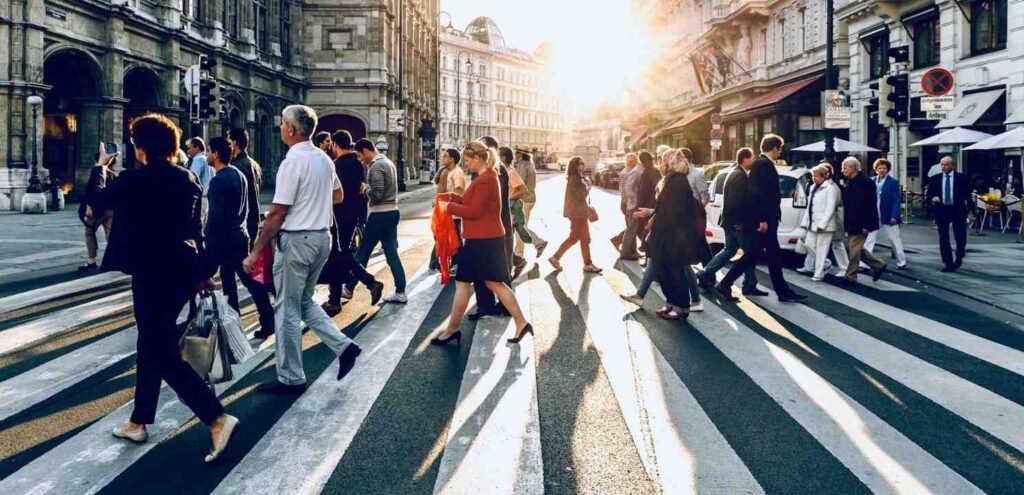
With the development of democracy, the scope of career choices for citizens will expand beyond the boundaries of nations, organizations, and regions. It will slowly transform the traditional national identity to a broader, deeper, and more democratic sense of social citizenship. Driven by widespread civic education, people will form various forms of social unities that shape a new model for society — the social citizen model.
Introduction
The social citizen capitalist society is a model that redefines the structure of civic engagement, shifting from the traditional “government-individual” paradigm to one centered around social organizations.
In this system, individuals participate in social and political life through these groups, which are the basic units of the society. They serve as the primary platforms for influencing societal development.
Unlike conventional citizenship which focuses on choosing a good government to solve the problems, social citizens are empowered with greater agency in the formation and interconnection of social groups. They actively shape the future of their communities and economies through organized collaboration.
What Is a Social Citizen?
A social citizen is a citizen who deeply understands how multiple systems in society impact personal well-being and takes actions to change the society for better. Unlike many citizens today, who primarily cling to personal interests and individual rights, social citizens recognize the intrinsic connection between personal happiness and collective welfare. This consciousness leads them to engage in social problem-solving, striving for a society where individual success aligns with communal prosperity.
In this updated civic model, people do not act as isolated individuals negotiating with a distant government. Instead, they work within social organizations to proactively resolve their problems and create meaningful change.
Social Organizations: The Foundation of the Social Citizen Society
At the core of the social citizen capitalist society are social organizations, which serve as the primary vehicles for social action. These organizations exist to address societal challenges and foster civic engagement.
Social organizations are not limited to traditional government institutions. They encompass a diverse range of collective entities, including but not limited to:
- Families: The most fundamental social unit, families play a crucial role in instilling civic values and fostering social responsibility from an early age.
- Communities: Geographic or interest-based communities provide essential support networks and serve as hubs for local problem-solving and civic action.
- Non-Governmental Organizations (NGOs): NGOs offer platforms for citizens to address societal issues such as environmental protection, human rights, and public welfare.
- Enterprises: Unlike in traditional capitalism, businesses in the social citizen society are expected to balance profit-making with social responsibility, contributing to community development rather than serving as purely profit-driven entities.
- Government Institutions: While governments continue to play a role, they transition into facilitators rather than sole decision-makers, supporting social organizations rather than dictating top-down policies.
Characteristics of Social Organizations
Social organizations in this model share several key characteristics:
- Human-Centered: These organizations prioritize human well-being over purely economic or bureaucratic considerations.
- Collaborative and Autonomous: They are self-governing entities that enable citizens to organize around shared goals, greatly reducing dependence on centralized government intervention.
- Purpose-Driven: Each organization operates with a clear social mission, whether it be improving education, protecting the environment, or ensuring economic fairness.
- Dynamic and Adaptive: As social needs evolve, social organizations continuously reshape their structures and objectives to address new challenges.
By fostering a network of interdependent social organizations, the social citizen capitalist society ensures that civic engagement is deeply embedded in everyday life. Citizens are no longer passive recipients of government policies but active participants in shaping a society that reflects shared values.
Social Citizen Society and Its Commitment to Civil Values
The social citizen capitalist society builds upon existing values of freedom, democracy, equality, and justice. However, unlike in today’s systems, where these principles are often reduced to rhetoric, the extensive presence of social organizations ensures their practical implementation.
Instead of relying solely on government enforcement, democracy and justice are upheld through decentralized, community-driven governance, making these ideals tangible in daily life.
Capitalism in the Social Citizen Society
One common misconception is that the social citizen capitalist society is a form of communism. However, this system is evolved from current capitalist model and remains fundamentally capitalist, with markets, competition, and private enterprise continuing to exist. The key difference lies in how capital is structured and managed.
Instead of absolute private ownership, capital operates within the framework of social organizations, making it less susceptible to exploitation.
In this system:
- Capital is viewed as a means to generate social value, not just private wealth.
- The unchecked power of capital is mitigated by social organizations, ensuring that economic activities align with collective well-being.
- The ultimate goal of economic activity is to produce social value, creating a more balanced and ethical version of capitalism.
Why This Model Matters
The social citizen capitalist society represents an evolution of both capitalism and democracy. By prioritizing civic engagement through social organizations, it offers a framework that reduces the risks of economic exploitation, strengthens democratic participation, and aligns personal and collective interests.
This model fosters a society where:
- Power is decentralized, allowing citizens to directly influence decision-making through their social organizations.
- Capitalism serves the common good, reducing economic inequality and fostering ethical business practices.
- Freedom and democracy are tangible realities, deeply integrated into daily life rather than remaining abstract ideals.
Advantages of extensive participation in social groups
Participation in social organizations offers many advantages that make society more civilized, inclusive, dynamic, and resilient:
- Empowering individuals with multidimensional roles: For example, one might be a volunteer in a community initiative, a researcher in a professional association, and a leader in a global movement. This flexibility allows individuals to maximize their skills and contribute meaningfully to society.
- Encouraging cross-organizational and cross-sector collaboration: Collaboration between organizations becomes common. For example, environmental groups work with businesses to create sustainable products, and tech communities partner with schools to share knowledge.
- Creating a globally connected society: Citizen-led social organizations are not bound by geographical or national borders, allowing them to operate on a global scale. This facilitates cross-border cooperation on issues like human rights, environmental sustainability, and technological ethics.
- Enhancing society’s self-regulation and adaptability: Unlike traditional government-led models, social organizations can respond to societal needs more swiftly without bureaucratic inefficiencies. During crises or emergencies, these organizations can mobilize resources and provide targeted assistance faster than centralized authorities. This decentralized governance structure strengthens social resilience and ensures long-term stability.
- Fostering a culture of democracy and strengthening civic engagement: With social organizations at the heart of governance, civic participation naturally increases. People reinforce democratic values, cooperation, and social responsibility through practice, not just through elections.
Conclusion
The social citizen capitalist society is not an abstract utopia—it is a practical evolution of modern society. By making social organizations the foundation of governance, it empowers citizens, humanizes capitalism, and ensures that democracy functions as more than just a system of periodic elections. This model envisions a future where individuals no longer stand alone against vast political and economic forces but work collectively to build a freer, fairer, and more sustainable world.