1. The historical roots of the brand new world
Many people today believe that the modern world is chaotic and fragmented, and that civilization seems to be heading nowhere. But in truth, the current state of the world did not appear out of nowhere. From the very beginning, human society has moved forward through struggles over power and resources. Through countless cycles of rise and fall, people gradually built systems, organizations, and institutions to bring some order to life.
In its earliest stage, almost every society was shaped by feudal systems. Land, power, and social status were tightly bound to bloodlines and aristocratic hierarchies. The privileges of a few depended on the hard labor of the many. Though primitive, this was the first step toward institutionalized society—it laid the groundwork for social order.
Later, as capital began to rise, wealth started to surpass bloodline in importance. This gave birth to the era of the nation-state driven by capital. The state was no longer just an extension of royal power. It became the central force in managing the economy and directing the flow of capital. The state turned into the largest capitalist entity—blending power and wealth to create a new kind of rule.
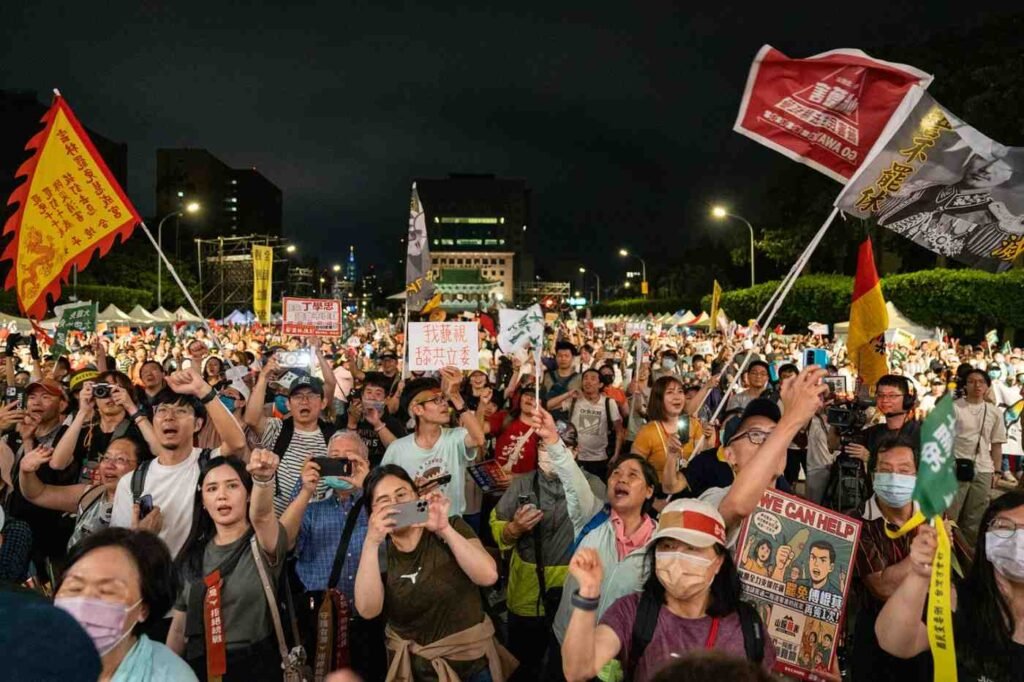
In modern times, the Western world tried to repackage its reality using ideals like “democracy” and “freedom.” This gave rise to a new form: the nation-state governed by both state and citizen capital. In this system, citizens gained certain rights, and their living standards improved. On the surface, it appeared open and progressive. But in reality, state capital—backed by powerful elites—remained the dominant force behind the scenes. What we call a “free economy” today is the result of a constant tug-of-war between state capital and citizen capital
Now, Western countries are quietly evolving toward a higher stage. The structures of capital, forms of social organization, and models of governance are all slowly shifting. A new kind of system is taking shape: the citizen-capital nation-state, where the influence of organized civil society and distributed ownership begins to challenge the older centralized powers. History does not move through sudden breaks—it moves through transitions. Modern Western nations may appear purely capitalist, but they are actually a hybrid—part feudal, part state-capitalist, part citizen-driven.
2. The true meaning of a new world: reshaping the fate of our time
The “ brand new world” is not some imagined utopia—it is the ultimate form of human civilization that we are bound to reach. It represents a complete citizen-based society, where being a citizen is no longer a symbolic title, but a real status with full rights and responsibilities.
In this new world, power is no longer held by a privileged few, wealth is no longer concentrated in the hands of oligarchs, and resources are no longer used as tools by dominant nations. Instead, every citizen should become an active participant in the governance of society. Capital becomes a shared asset of the people. Means of production, essential resources, political power, and public welfare are all distributed according to clear rules, based on each citizen’s rights and responsibilities.
This is not just a reform of political systems—it is a higher evolution of civilization itself. It marks both an end and a beginning: the end of autocracy, monopolized capital, and false democracy; and the beginning of a new era built on shared citizenship, collective ownership of capital, and collaborative governance. It aims to erase the scars of the past and bring an end to the ancient chain of power, wealth, and suffering that has shaped human life for millennia.
3. A complete vision of the citizen-capital society
The citizen–capital nation-state is built on three core principles: shared ownership by citizens, collaborative governance, and joint capital management. Unlike current models based on state capital or state–citizen hybrids, this system deconstructs the traditional nation-state into a social community, redefines capital as a public means of production, and transforms power into a self-governing network of citizens.
In this framework, the means of production are collectively owned through public investment by the citizens themselves—though privately owned large-scale capital may still exist. All key sectors tied to resources, infrastructure, and public welfare are placed under a citizen-led capital management system. Profits from these major enterprises are taxed according to each citizen’s share of investment. Citizens who invest socially are not only the managers and supervisors, but also the beneficiaries of the system.
In this new model, the state is no longer a coercive force standing above society. It exists only by the mandate of a citizen-led assembly, with all power originating from and returning to the people. Political rights are equally shared by all citizens. Governance is carried out through a combination of public deliberation, collective decision-making, rotating leadership, direct elections, and transparent oversight. Citizens are no longer mere voters—they are active participants in policymaking, management, and implementation.
Social welfare is funded through the surplus of public capital. Healthcare, education, elder care, housing, and infrastructure are all guaranteed through a universal citizen welfare system that ensures basic living rights for everyone. Wealth inequality is naturally regulated through mechanisms of capital redistribution. Extreme poverty is eliminated, and the phenomenon of extreme wealth concentration becomes a thing of the past.
Economically, this society functions under a fully citizen-driven free market system, organized along three tracks: citizen economy, state-supported economy, and civil society economy. The free citizen economy fosters individual initiative and innovation by citizens, public institutions, and social organizations alike. At the same time, essential sectors—those tied to national livelihood—are strategically coordinated through citizen capital planning, ensuring that public needs and wellbeing are met for all.
Conclusion: The destined destination of human civilization
The Brand New World is not a triumph of any ideology, but the inevitable outcome of humanity’s own development. As productivity reaches new heights, the unchecked expansion of capital inevitably triggers social crises. The extreme concentration of power leads to rigid governance. And the people’s genuine desire for freedom, justice, and equality will eventually surpass what existing systems can provide. These tensions compel civilization to evolve, giving rise to a higher form of social organization. This new form is a rejection of feudalism, a correction of capitalism, as well as an elevation of citizenship—it is the long-anticipated community-based society that humanity has envisioned across centuries.
At Yicheng Commonweal, we call this brand new world because it transcends the outdated framework of the nation-state. It moves toward a citizen-based global society, bound by shared social capital, and aiming for a global community of civilizational destiny.
We stand at the brink of a full civilizational rebirth.
This is the origin and vision of the New World—
And it is where human civilization is ultimately headed.