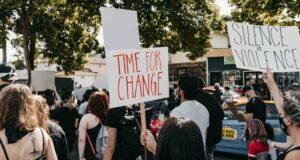
One of the greatest advancements of civilization today is not just the height of technology or the prosperity of cities, but the fact that people are finally being seen as an end rather than a means. When individuals transition from being ruled and managed to becoming thinking, vocal, and responsible members of society, we step into a new stage of civilization.
At this stage, being a citizen is no longer just a legal status—it is an ideal of character, an institutional role, and a way of existing in society. So, what should a citizen in a mature society possess? And what responsibilities should they take on?
This article puts it simply: power, responsibility, and protection are the three keys that define what it really means to be a citizen in a modern society. They are not only a recognition of rights, but also a call to duty—not only gifts of the system, but tools that forge personal character.
Take away any one of these, and the idea of citizenship falls apart. And without real citizens, you can’t have a truly civilized society.
1. Power: Being recognized means saying “I’m here” in the modern world
For most of human history, power was a privilege held by the few. The rest were managed, sacrificed, or forgotten. It wasn’t until the rise of the modern nation-state that we began to acknowledge a basic truth of civilization: every person has the right to take part in shaping their own future.
Citizen power isn’t a gift—it’s a birthright
Freedom of speech, the right to vote, to hold leaders accountable, to organize, to protest—these aren’t favors handed down by the state. They’re the foundation of the social contract. If a society expects people to follow laws, respect rules, and do their part, it must first give them a voice in creating those rules.
Power is what turns a citizen from a passive bystander into an active owner of society.
A true “modern human” is, above all, someone who has the right to speak up, the strength to stand against injustice, and are entitled to shape the future.
Power is the foundation of happiness
Without power, freedom can be silenced.
Without power, dignity can be crushed.
Without power, happiness becomes a favor—not a right.
Power is the first line of defense for happiness—it is what the system gives us to claim the way we want to live.
That’s why every citizen must understand: my power is proof that I exist. To defend it is not just about protecting myself—it’s about making sure the next generation can still live in the light.

2. Responsibility: Behind freedom lies our response to society
Civilization isn’t just built on “what I want”—it must also be built on “what I should do.”
Without responsibility, power turns into selfishness and abuse. Without accountability, freedom slips into emptiness and destruction.
In a civil society, responsibility isn’t something imposed from the outside—it comes from a place of personal maturity.
Citizen responsibility is an active response to the community
Paying taxes, serving in the military, following the law, caring about public affairs, participating in democracy, respecting others’ rights, supporting the vulnerable—these are not just legal requirements. They represent a core value: I am not just an individual; I am part of society. No one is an outsider. Every time someone chooses inaction, it’s a step toward society’s breakdown.
In a complex and diverse modern society, responsibility isn’t just the foundation for maintaining order—it is the invisible contract that allows trust to flourish among us all.
Responsibility is another path to freedom
Some people misunderstand freedom as “doing whatever I want,” but they forget that only those willing to take responsibility for their choices truly deserve freedom. Social freedom isn’t about “escaping control”—it is about understanding the goodwill behind the rules and asserting yourself within the boundaries.
A citizen’s responsibility reflects their freedom. It is not a form of constraint, but a self-imposed discipline—a weight we choose to bear for the people we care about and the causes we believe in.
3. Protection: The warmth of the system is the bottom line of civilization
While power and responsibility define the moral contract between individuals and society, protection is the system’s core promise to its citizens—it is the safety net that ensures no one falls through the cracks.
Citizen protection is the very reason for a modern state’s existence
No one should lose their dignity because of illness, lose hope because of poverty, or have their future taken away due to where they were born. Education, healthcare, social security, job opportunities, and fair justice are not just “perks”—they are the system’s way of showing basic respect for every individual.
A citizen without protection may have a vote, but lacks real existence; may have rights, but doesn’t live a life of dignity.
Protection doesn’t weaken a person’s abilities—it ensures that everyone has the chance to stand tall, with the strength to chase their own dreams.
Protection is the moral compass of the system
In a healthy society, no one should fall into despair due to poverty or illness, no one should be abandoned because of old age, and no one should have nowhere to turn after being wronged.
A true civil society ensures that every ordinary person—regardless of background, resources, or powerful connections—can live a life of respect and dignity.
This protection is not only the conscience of the system, but also the warmth of society and the very essence of civilization.

The Unity of Power, Responsibility, and Protection
Power, responsibility, and protection are an interdependent and mutually balanced organic whole:
- Power without responsibility is enslavement.
- Responsibility without power is abuse of power.
- Power and responsibility without protection are empty structures.
- Protection without power is charity.
- Protection without responsibility is dependency.
Only when these three work together can true citizenship and the stability of modern society be achieved.
This is the fundamental logic of the modern state: power lifts people’s heads, responsibility upholds their dignity, and protection brings security.
Conclusion: Empowering Individuals, Illuminating Society
The greatness of civilization doesn’t lie in its power, but in its ability to ensure that ordinary people live lives filled with light and warmth.
The ideal of a civil society is this: to regain one’s voice through power, restore dignity through responsibility, and find security through protection.
Each of us is not only a part of this nation but also the master of this era. We have the right to say “no,” the responsibility to say “yes,” and the strength to stand tall without fear of being abandoned in the storm.
Power, responsibility, protection—these three swords of citizenship are not only gifts from modern society, but also the greatest legacy we can pass to the next generation.
Yicheng Commonweal sincerely wishes for everyone to become a citizen of light, wielding these three swords—lifting dignity through the system, defending freedom through responsibility, and securing happiness through protection.